 Pin it
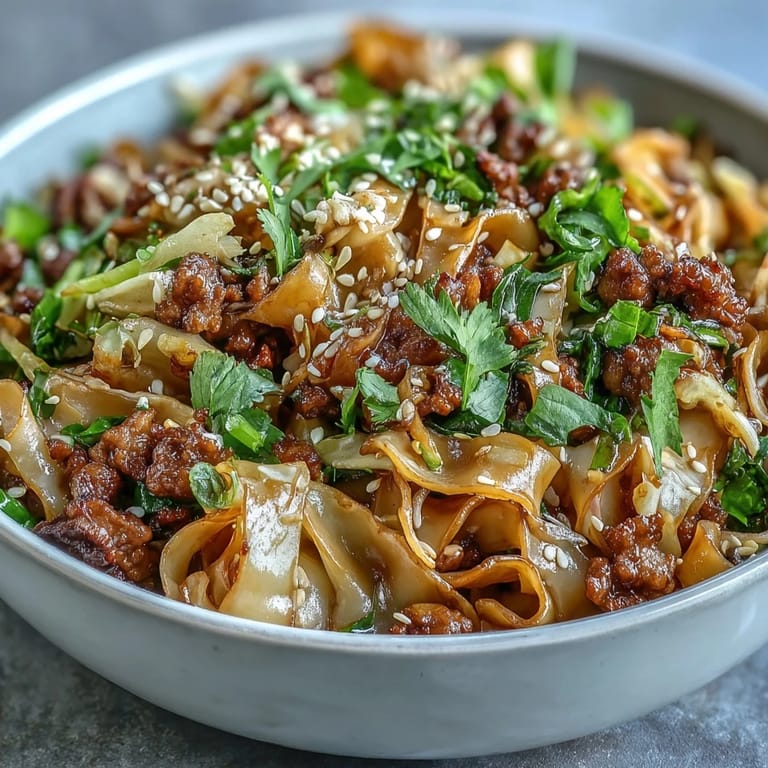
 My neighbor brought over a container of leftover potstickers one Tuesday night, and I found myself staring at them the next morning, wondering how to stretch them into something new. Instead of reheating them cold, I thought: what if I deconstructed them entirely? I cooked noodles, browned some ground pork with that same dumpling seasoning, tossed in vegetables, and suddenly had this vibrant bowl that tasted like potstickers but felt lighter, more alive. Now I make these bowls on nights when I want that crispy-savory-herbaceous magic without the folding and pleating.
I served this to my sister on a random Thursday when she was stressed about work, and watching her slow down with each bite, saying almost nothing, told me everything. Food doesn't have to be fancy to matter; sometimes it just needs to taste like someone understood what you needed that day.
Ingredients
- Rice or lo mein noodles (8 oz): Rice noodles cook faster and have a delicate chew, but lo mein holds sauce better if you prefer something sturdier.
- Ground pork or chicken (1 lb): Pork carries flavor beautifully here, but chicken works if you want something leaner.
- Soy sauce (1 tbsp for meat, 1/3 cup for sauce): The backbone of everything, so use one you actually like tasting straight.
- Toasted sesame oil (1 tsp for meat, 2 tsp for sauce): This isn't cooking oil; it's flavor in liquid form, so add it at the end or you'll burn away the magic.
- Cornstarch (1 tsp): It helps the meat stay tender and slightly sticky, just like dumpling filling.
- White pepper (1/4 tsp): Milder and more delicate than black pepper, it whispers rather than shouts.
- Garlic and ginger (3 cloves and 1 tbsp): Mince them fine so they distribute evenly and perfume the whole pan.
- Green onions (4, whites and greens separated): Cooking the whites early builds depth; the greens go on last for brightness and bite.
- Shredded cabbage and carrots (2 cups and 1 cup): These are your texture anchors; don't skip the shredding step or they'll take forever to soften.
- Mushrooms (1 cup sliced): They absorb the savory sauce and add earthiness that grounds the whole bowl.
- Rice vinegar, oyster sauce, chili-garlic sauce (2 tbsp, 1 tbsp, 1 tbsp): These three create the potsticker-style sauce; taste as you go because heat levels vary by brand.
- Brown sugar or honey (1 tbsp): Just enough to balance the salty-spicy-sour notes without tasting sweet.
- Cilantro and sesame seeds (1/2 cup and 2 tsp): Finish with these for color, aroma, and that toasted crunch.
Tired of Takeout? 🥡
Get 10 meals you can make faster than delivery arrives. Seriously.
One email. No spam. Unsubscribe anytime.
Instructions
- Cook the noodles until just tender:
- Boil water, add noodles, and time them carefully so they're soft but still have a slight resistance when you bite. Drain, rinse quickly with cold water to stop the cooking, then toss with a few drops of oil so they don't clump into a solid mass while you work on everything else.
- Season the meat and let it rest:
- Whisk soy sauce, sesame oil, cornstarch, white pepper, sugar, and salt into a small bowl until smooth, then pour it over your ground meat and mix gently until it feels slightly sticky and holds together. This is the dumpling seasoning doing its job, so don't rush or overwork it.
- Whisk the sauce until smooth:
- Combine soy sauce, rice vinegar, oyster sauce, chili-garlic sauce, sesame oil, brown sugar, and broth in a bowl, stirring until the sugar dissolves completely. Taste it and adjust; if it's too salty, add a splash more broth; if it's too mild, add a bit more chili-garlic sauce.
- Prep all vegetables before you turn on the heat:
- Shred your cabbage and carrots, slice the mushrooms, separate the white and green parts of the green onions, and roughly chop your cilantro. This is mise en place, and it's the difference between feeling in control and scrambling.
- Brown the meat in a hot skillet until the edges crisp:
- Heat oil over medium-high heat, then crumble the seasoned meat into an even layer and resist the urge to stir for 2 to 3 minutes so it browns deeply. You're looking for golden-brown bits and a savory crust, which is where all the flavor lives.
- Add aromatics and let them bloom:
- Push the cooked meat to the side, add a bit more oil to the empty space, then add garlic, ginger, and the white parts of the green onions. Stir constantly for 30 to 60 seconds until the kitchen smells incredible, then mix everything together.
- Sauté the mushrooms until they soften and release their moisture:
- Add sliced mushrooms and cook for 2 to 3 minutes, stirring occasionally, until they lose their firmness and start to turn golden at the edges. They're releasing their umami, which deepens everything around them.
- Add the cabbage and carrots, then keep the pan moving:
- Toss in your shredded vegetables and stir-fry for 3 to 4 minutes, keeping the heat high so they soften but stay crisp rather than turning mushy. If the pan feels dry, splash in a bit of water.
- Pour in the sauce and let everything come together:
- Add your prepared sauce to the skillet, toss everything well to coat evenly, and simmer for 1 to 2 minutes until the sauce thickens slightly and clings to the meat and vegetables. This is when you take a spoon and taste, adjusting as needed.
- Add the noodles and toss gently but thoroughly:
- Pour in your cooked noodles and toss everything together until the sauce coats every strand. If it feels too dry, add a splash of water or broth, and stir in bean sprouts in the final minute if you're using them.
- Finish with fresh elements and serve immediately:
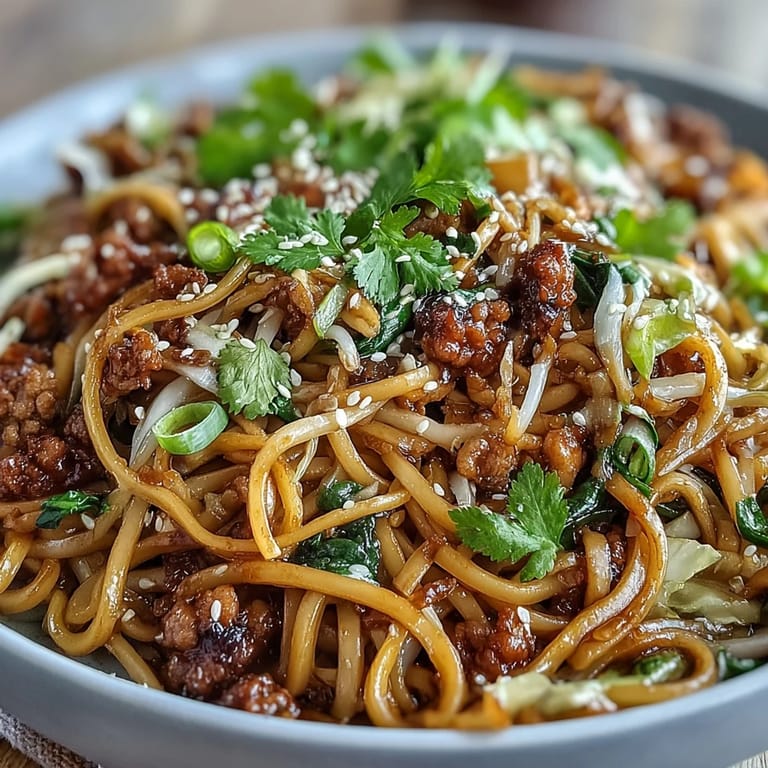
- Taste once more for seasoning, stir in half the green onion tops, then divide into bowls and top each one with the remaining green onions, cilantro, and sesame seeds. Have extra chili-garlic sauce and lime wedges at the table for people to adjust their own bowls.
 Pin it
 The first time I made this for friends, one of them asked if the meat was actually from a potsticker, and the fact that she couldn't tell it was ground pork in a bowl instead of wrapped in dough felt like the highest compliment. Food that tastes like love doesn't need ceremony; it just needs to be honest and generous.
Why This Works as a Bowl
Potstickers are magic because they layer flavors and textures into something small and perfect. A potsticker bowl does the same thing but spreads it out across rice noodles and vegetables, so every spoonful has meat, sauce, crunch, and softness. You're not losing anything by deconstructing; you're actually gaining control over how much of each element ends up in each bite. The noodles become your vehicle for the potsticker filling instead of the wrapper, which means the sauce matters even more.
The Sauce is Everything
I've learned through trial and error that the sauce in this bowl is what separates it from just sautéed noodles. It needs to taste bold on its own because it's the only thing bringing all these disparate elements together. The soy sauce gives you salt and depth, the rice vinegar adds brightness and a slight tang that makes your mouth water, the oyster or hoisin brings umami and a subtle sweetness, and the chili-garlic sauce gives it backbone and heat. The brown sugar isn't there to make it dessert-like; it's there to round out the sharp edges and make everything taste harmonious instead of chaotic.
Shopping and Substitutions
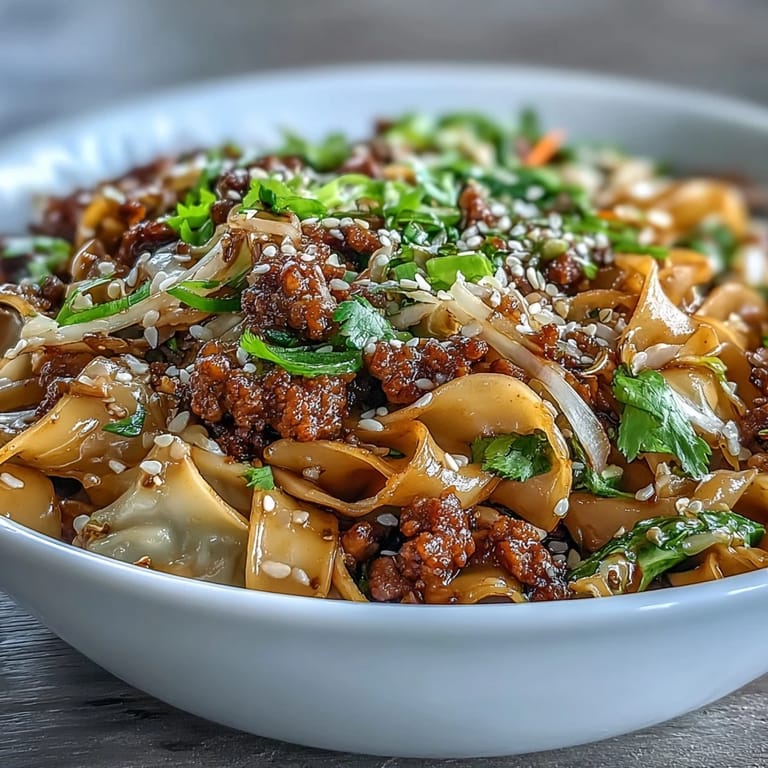
You can make this bowl with whatever ground meat you have on hand, or skip meat entirely and double the mushrooms and add a fried egg on top. For vegetables, swap in baby bok choy, napa cabbage, or shredded kale instead of green cabbage if that's what's in your crisper. The sauce can be made gluten-free by using tamari instead of regular soy sauce and checking your oyster sauce label. Rice noodles are naturally gluten-free and tender, but lo mein noodles or even thin wheat noodles work beautifully if that's what you're buying. Don't feel locked into the exact recipe; feel empowered to improvise.
- Ground turkey or beef works just as well as pork and takes the same cooking time.
- If you can't find chili-garlic sauce, use sriracha or hot sauce thinned with a splash of rice vinegar.
- Bean sprouts can be swapped for snap peas or thinly sliced bell peppers if you prefer.
 Pin it
 This bowl tastes best eaten while it's still warm enough that the sauce clings to everything, so gather people around and serve it immediately. Leftovers keep for three days in the refrigerator and reheat beautifully with a splash of water, which makes this a smart dinner for a weeknight that also gives you lunch the next day.
Recipe Questions & Answers
- → What makes this taste like potstickers?
The seasoning blend for the ground pork mirrors traditional dumpling filling with soy sauce, sesame oil, white pepper, and sugar. The sauce combines the same flavors you'd dip potstickers into—soy, vinegar, chili-garlic, and sesame oil.
- → Can I use different noodles?
Rice noodles work beautifully for a gluten-free option, while lo mein or wheat noodles offer a chewier texture. Even spaghetti or udon can substitute in a pinch. Just adjust cooking time accordingly.
- → How spicy are these noodle bowls?
The chili-garlic sauce adds moderate heat that's balanced by the sweet and savory elements of the sauce. Reduce the amount or omit for a milder version, or increase for more spice lovers.
- → What protein alternatives work well?
Ground chicken, turkey, or beef all substitute seamlessly. For a vegetarian version, use crumbled tofu, plant-based ground meat, or increase the mushrooms and beans sprouts while adding extra seasoning.
- → Can I prepare this ahead?
The sauce can be mixed and vegetables prepped up to a day in advance. Cooked leftovers refrigerate well for 3 days—reheat with a splash of water or broth to refresh the noodles.