 Pin it
 My neighbor knocked on my door one Tuesday evening with a container of broiled salmon and rice, apologizing because she'd made too much. I reheated it that night and was genuinely surprised by how the caramelized edges of the salmon contrasted with the cool cucumber and creamy avocado. That bowl sparked something in my kitchen—a realization that dinner didn't need to be complicated to feel nourishing and intentional. Now it's become my go-to when I want something that tastes restaurant-quality but doesn't demand hours of fussing.
I'll never forget assembling these bowls for my sister's book club—everyone assumed I'd spent my whole day cooking. The truth was, I'd prepped the salmon and rice while chatting on the phone, then arranged everything fresh right before they arrived. Watching them dig in and immediately ask for the recipe made me understand that this bowl has that magical quality of looking intentional without requiring you to sacrifice your time or peace of mind.
Ingredients
- Salmon fillet, cut into 2 cm cubes (500 g): Cubing the salmon instead of cooking it as a whole fillet means more surface area for that gorgeous caramelization, and the pieces cook evenly in about 8 minutes—I learned this the hard way after overshooting a whole fillet by three minutes.
- Soy sauce (2 tbsp): This is your umami backbone; if you're cooking gluten-free, tamari tastes virtually identical and won't compromise the marinade's depth.
- Sesame oil (1 tbsp): Use the toasted kind—it's more flavorful and a little goes a long way, so don't be tempted to add more or it'll overpower everything else.
- Honey or maple syrup (1 tbsp): The sweetness caramelizes the salmon beautifully and balances the salty-savory elements; maple syrup gives a slightly deeper note if you have it on hand.
- Fresh ginger, grated (1 tsp): Grating it fresh rather than using ground ginger makes a real difference—the brightness of fresh ginger threads through the whole marinade.
- Garlic, minced (1 clove): One clove is perfect; more would make the salmon taste like garlic soup, which I discovered one overcautious evening.
- Black pepper (½ tsp): Freshly cracked pepper has a bite that pre-ground just can't match, so if you have a mill, this is the moment to use it.
- Jasmine or sushi rice (2 cups): Jasmine rice stays fluffy and slightly fragrant, while sushi rice is stickier if you prefer bowls that hold together when you pick them up with chopsticks.
- Water (3 cups): The ratio matters—too much water and you'll have mush, too little and you'll have crunchy rice halfway through cooking.
- Salt for rice (½ tsp): A small amount in the cooking water seasons the rice evenly from within.
- Cucumber, thinly sliced (1 cup): English cucumbers stay crisp longer than regular ones and have fewer large seeds that throw off the texture.
- Shredded carrots (1 cup): Pre-shredded saves time, but if you shred them fresh, they taste slightly brighter and stay crunchy longer.
- Edamame, shelled and cooked (1 cup): Frozen edamame is just as good as fresh and actually more convenient—just thaw them or warm them quickly in hot water.
- Avocado (1): Slice it just before assembling so it doesn't brown; if you're making these ahead, hold the avocado and add it at serving time.
- Green onions, thinly sliced (2): The white and light green parts go into the bowl, and if you have extra, save the dark green tops for a garnish that looks intentional.
- Toasted sesame seeds (2 tbsp): Buy them already toasted if you can find them—it's one less thing to watch on the stove, and they add that crucial textural contrast.
- Sriracha mayo (4 tbsp): Mix mayonnaise with sriracha and a squeeze of lime right before serving; it stays creamy and doesn't separate when you do it fresh.
- Soy sauce or tamari for drizzling (4 tbsp): Some people prefer just this without the spiced mayo, and both options deserve respect.
- Pickled ginger (2 tbsp): It cuts through the richness of the salmon and avocado with a bright, vinegary zing that feels like palate cleansing between bites.
- Lime wedges for serving: A squeeze of fresh lime at the end brings everything into focus and prevents the bowl from feeling too heavy.
Tired of Takeout? 🥡
Get 10 meals you can make faster than delivery arrives. Seriously.
One email. No spam. Unsubscribe anytime.
Instructions
- Get your oven ready and set the stage:
- Preheat your oven to 220°C (425°F) and line a baking tray with parchment paper. This temperature is hot enough to give the salmon those caramelized edges without cooking the insides too fast—I learned to respect this number after a few rubbery batches.
- Build the marinade and coat the salmon:
- Whisk soy sauce, sesame oil, honey, ginger, garlic, and pepper together in a bowl until everything's combined. Add your salmon cubes and gently toss them so every piece gets coated, then let them sit for 10 minutes—this is just long enough for the flavors to sink in without the acid starting to cook the fish raw.
- Start the rice while salmon soaks:
- Rinse your rice under cold running water, stirring it gently with your fingers until the water runs mostly clear. In a saucepan, combine the rinsed rice, water, and salt, then bring it to a boil over medium-high heat—you'll hear it bubbling and smell that slightly sweet rice smell.
- Transition rice to simmer:
- Once it's boiling, reduce the heat to low, place a lid on the saucepan, and let it steam for 12–15 minutes without peeking. After the timer goes off, remove it from heat and keep the lid on for another 5 minutes—this final rest lets the rice absorb the last bit of moisture and become perfectly tender.
- Broil the salmon until it's just cooked through:
- Spread your marinated salmon cubes in a single layer on the prepared tray and slide it into the oven. Broil or bake for 8–10 minutes, watching carefully until the edges are lightly browned and a gentle fork easily flakes through the thickest piece—it should still look slightly glossy inside.
- Prepare fresh vegetables and your sauce:
- While salmon cooks, slice your cucumber, shred or arrange your carrots, ensure your edamame is ready, slice your avocado, and chop your green onions. Mix together your sriracha mayo or prepare whatever sauce combination calls to you.
- Assemble your bowls with intention:
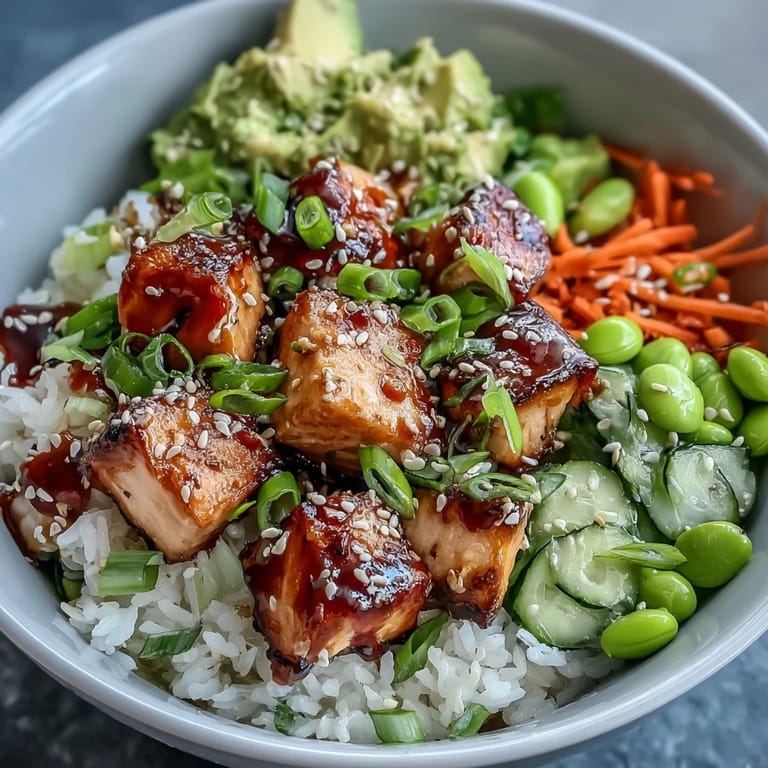
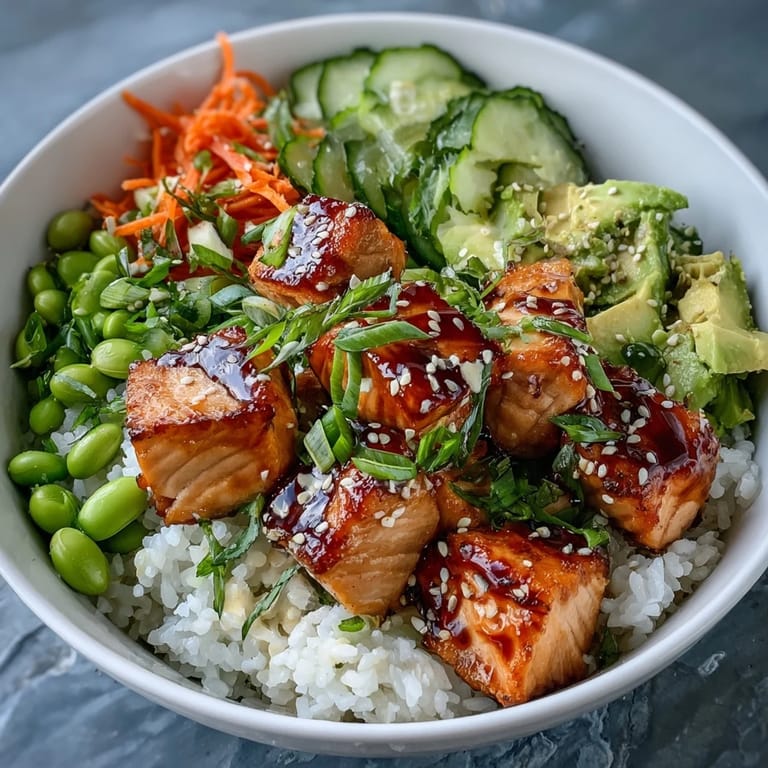
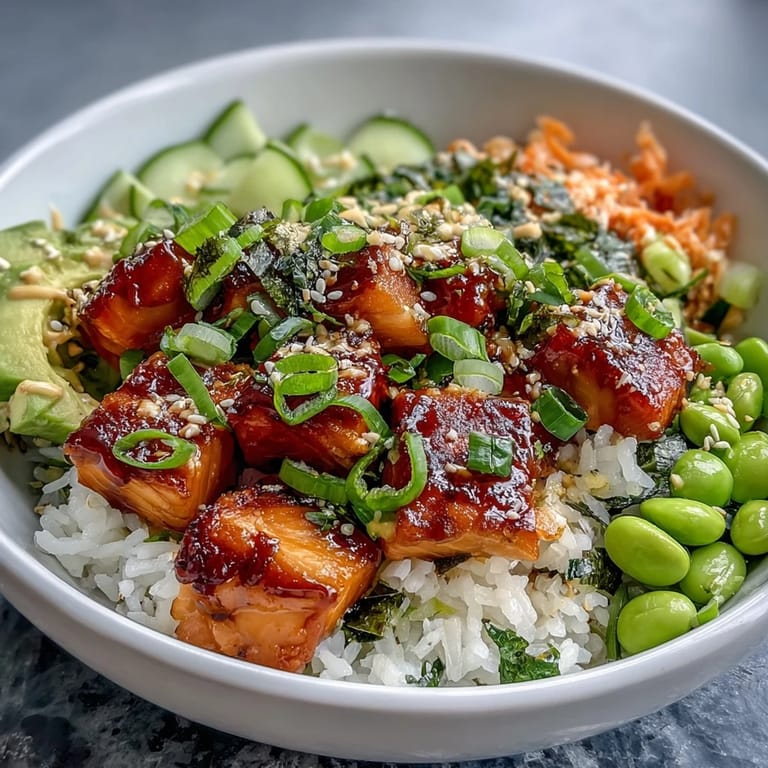
- Divide rice evenly among four bowls as your base layer. Top each with broiled salmon, then layer on cucumber, carrots, edamame, and avocado in whatever order feels right to you—I like the edamame and cucumber on opposite sides because their colors look beautiful together.
- Finish with sauce, seeds, and garnishes:
- Drizzle your chosen sauce across the bowl, sprinkle with sesame seeds and green onions, and place a lime wedge on the side. Serve immediately while the salmon is still warm and the vegetables are still crisp.
 Pin it
 I made this bowl for my partner one night after a particularly long work day for both of us. We sat at the counter without phones or distractions, and somehow eating something so colorful and carefully arranged made us both pause long enough to actually talk. It became the bowl we cook when we need to reconnect without making it a big production—that's when I knew it had become more than just dinner.
Why This Bowl Beats Takeout
Ordering from a fusion restaurant costs nearly double the price of making this at home, and honestly, your version tastes better because everything is made fresh while you're there. The salmon won't sit under heat lamps, the rice stays fluffy instead of hardening as it cools, and you can control exactly how much sauce coats every bite. Plus, there's something deeply satisfying about arranging your own bowl rather than accepting whatever the restaurant decides is the right proportion of vegetables to fish.
Making It Your Own
This bowl is genuinely forgiving if you want to swap things around—I've used grilled tofu instead of salmon on weeks when I'm eating lighter, and I've added roasted nori strips when I found some in my pantry. Some nights I'll add pickled radish for extra crunch, other nights I skip the edamame and double down on cucumber. The beauty is that the marinade, the rice foundation, and the sauce do the heavy lifting flavor-wise, so your vegetables are just there to add texture and personality.
Storage and Batch Cooking
If you want to make these bowls ahead for a busy week, cook everything except the avocado and slice it right before eating so it doesn't brown. The salmon and rice store beautifully in separate containers for up to four days, and you can assemble bowls fresh from cold ingredients if you prefer them chilled rather than warm. I've also found that this bowl tastes completely different when served cold—it becomes more of a salad situation where the flavors feel cleaner and brighter.
- Keep the sauce in a separate container and add it just before eating so nothing gets soggy.
- If your avocado is firm, you can slice it the night before and toss it with a tiny squeeze of lime to prevent browning.
- Toasted sesame seeds stay fresh longer if you keep them in an airtight container and add them right before serving.
 Pin it
 This bowl reminds me that weeknight dinners don't have to mean sacrifice—they can be nourishing, beautiful, and genuinely delicious without requiring a culinary degree. Every time I make it, I'm a little surprised that something so simple tastes this complete.
Recipe Questions & Answers
- → Can I grill the salmon instead of baking?
Yes, grill the marinated salmon cubes on skewers or in a grill basket for 4-5 minutes per side over medium-high heat until cooked through and lightly charred.
- → What other grains work well in this bowl?
Brown rice, quinoa, cauliflower rice, or even soba noodles make excellent substitutes for jasmine rice while maintaining the bowl's texture and nutritional balance.
- → How long does marinated salmon keep?
Marinate the salmon for up to 2 hours in the refrigerator before cooking. Once prepared, store cooked salmon separately from rice and vegetables for up to 3 days.
- → Can I make this bowl ahead for meal prep?
Yes, prepare all components separately and store in airtight containers. Reheat salmon gently and assemble bowls fresh, adding cold vegetables and avocado right before serving.
- → What vegetarian protein substitutes the salmon best?
Grilled tofu cubes, tempeh, or shrimp work beautifully with the same marinade. Adjust cooking time accordingly—tofu needs 15-20 minutes, shrimp just 3-4 minutes.