 Pin it
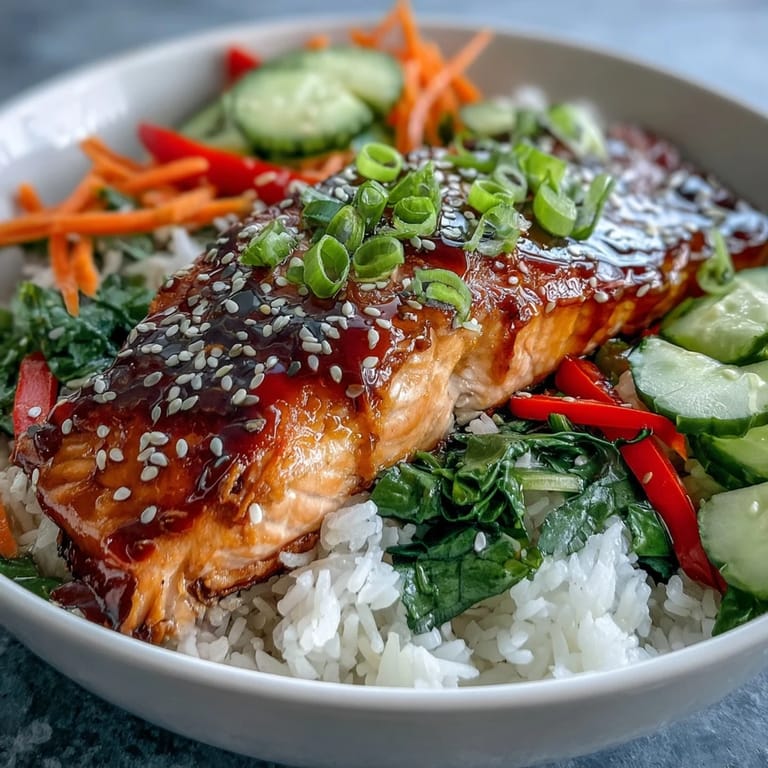
 My friend texted me a photo of a salmon bowl from a trendy spot downtown, and I realized I'd been overthinking this whole healthy dinner thing. That evening, I raided my fridge and threw together what felt natural: some salmon I'd thawed, leftover rice, vegetables I julienned while half-watching a cooking show. What came together was brighter and more satisfying than anything I could've ordered, and the ginger-soy glaze made the whole kitchen smell incredible. Now it's become my go-to when I want something that feels both indulgent and actually good for me.
I made this for my roommate after she'd been eating sad desk lunches for weeks, and watching her face light up when she tasted it made me realize how much care shows up in a good meal. She asked for the recipe immediately, and now we make it together on lazy Sundays while chatting about the week. That bowl became our thing.
Ingredients
- Salmon fillets (150 g each): Choose fillets that are roughly the same thickness so they cook evenly; thinner pieces dry out quickly while thicker ones might be raw inside.
- Soy sauce: This is your umami foundation, so don't skip it or substitute it carelessly—it's what makes the glaze sing.
- Honey: It balances the saltiness and creates a subtle gloss when baked; you'll taste it more as a feeling than a specific flavor.
- Fresh ginger, grated: The fresher the better; pre-grated loses its punch within days, so grate it right before mixing if you can.
- Garlic, minced: Two cloves is just enough to add depth without overpowering the delicate salmon.
- Rice vinegar: This keeps things bright and prevents the glaze from becoming cloying—it's a small addition that matters hugely.
- Sesame oil: Use the toasted kind; it has a nutty richness that the refined version simply doesn't offer.
- Cornstarch (optional): Add this only if you want a glossy, thickened glaze that clings to the salmon; skip it for a lighter, runnier sauce.
- Jasmine or sushi rice: Jasmine has a gentle floral note that pairs beautifully with the Asian flavors; don't use long-grain if you want that slight stickiness that holds bowls together.
- Water: Use filtered if your tap water is heavily chlorinated, as it does affect the rice's final taste.
- Carrot, julienned: Cut these into thin, even matchsticks so they stay crisp and look as good as they taste.
- Cucumber, julienned: Use English cucumbers if possible; they have fewer seeds and a milder flavor than regular ones.
- Red bell pepper, julienned: The sweetness rounds out the savory glaze beautifully, and the crunch adds textural contrast.
- Edamame, shelled and cooked: Buy them pre-cooked and frozen; it saves time and they thaw instantly when added to warm bowls.
- Toasted sesame seeds: These are non-negotiable for the nuttiness and visual appeal; raw sesame seeds taste like nothing in comparison.
- Scallions, thinly sliced: They add a mild onion bite and color; slice them just before serving so they stay vibrant.
- Lime wedges: A squeeze of fresh lime right before eating brightens everything and cuts through the richness.
Tired of Takeout? 🥡
Get 10 meals you can make faster than delivery arrives. Seriously.
One email. No spam. Unsubscribe anytime.
Instructions
- Rinse and steam the rice:
- Run cold water over your rice in a fine-mesh strainer, stirring gently with your fingers until the water runs clear; this removes excess starch and prevents gumminess. Bring it to a boil with the measured water, then drop the heat low, cover tightly, and let it steam undisturbed for 15 minutes—resist the urge to peek.
- Whisk together the glaze:
- In a small bowl, combine soy sauce, honey, ginger, garlic, rice vinegar, and sesame oil until everything dissolves into a cohesive sauce. Taste it on your finger; it should make you do a little head nod at how balanced it is.
- Thicken if you like:
- If you're going for a glossy, clingy glaze, whisk cornstarch with a tablespoon of water until smooth, then stir it into the glaze mixture. This step is totally optional but changes the whole vibe of how the sauce sits on the salmon.
- Prepare the oven and salmon:
- Heat your oven to 200°C and line a baking sheet with parchment paper. Place salmon fillets skin-side down and brush them generously with the glaze, reserving the rest for later drizzling.
- Bake the salmon:
- Slide the sheet into the oven and set a timer for 12 to 14 minutes; the salmon is done when it flakes easily with a fork and the thickest part is opaque. Don't overbake or it turns dry and chalky.
- Reduce the remaining glaze:
- While the salmon cooks, pour the reserved glaze into a small saucepan and bring it to a gentle simmer over medium heat, stirring occasionally. If you added cornstarch, it'll thicken noticeably; if not, it'll just warm through and concentrate slightly.
- Prep the vegetables:
- Using a sharp knife or mandoline, julienne your carrots, cucumber, and red bell pepper into thin, even pieces. Consistent sizing matters both for looks and for how they cook as they sit in the warm bowls.
- Assemble the bowls:
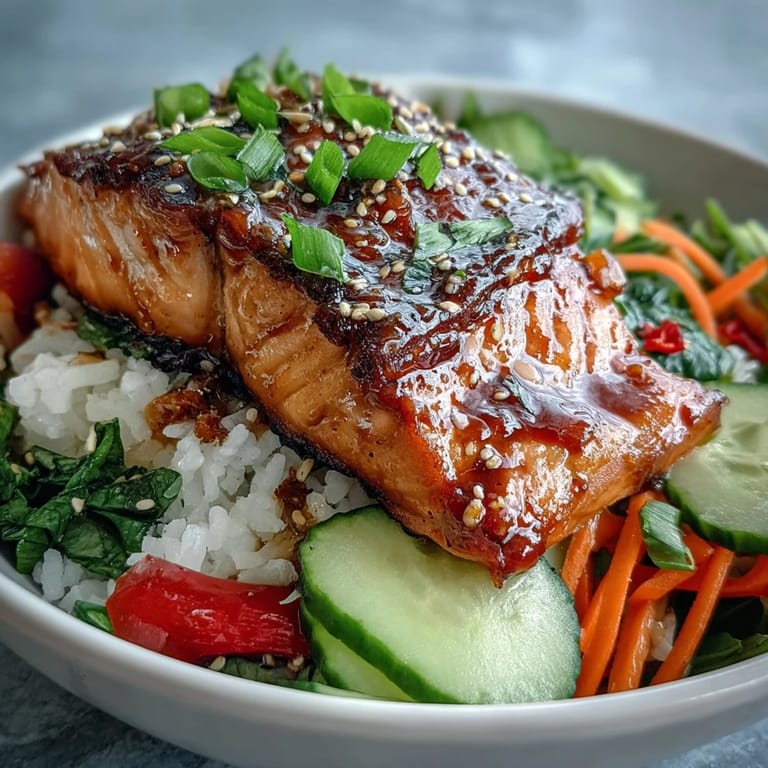
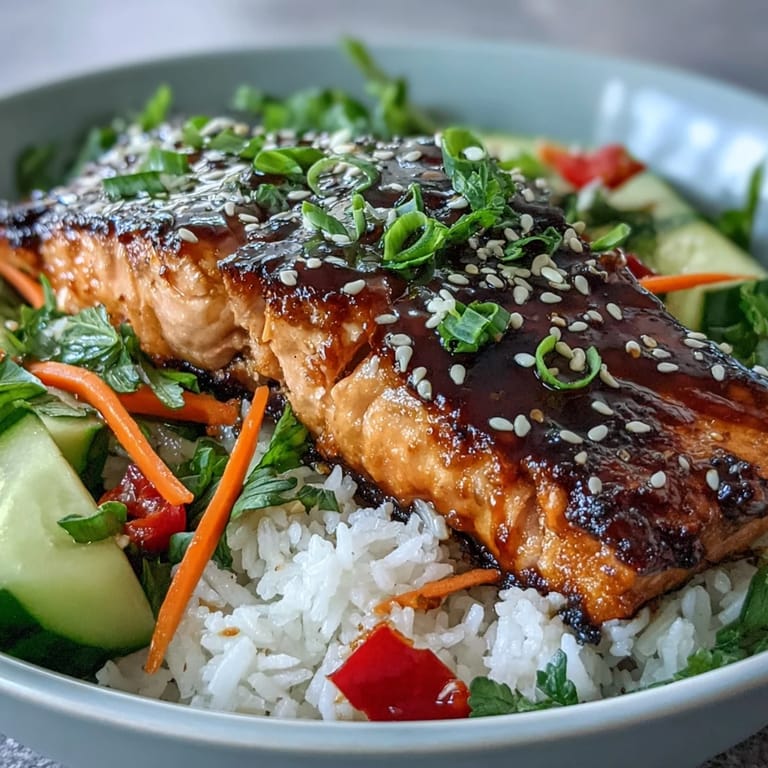
- Divide the warm rice among four bowls, then place a salmon fillet on top of each portion. Arrange the fresh vegetables and edamame artfully around the salmon, building little pockets of color and texture.
- Finish and serve:
- Drizzle the reduced glaze over everything, then scatter toasted sesame seeds and sliced scallions across the top. Squeeze lime over your bowl just before eating to wake up all the flavors.
 Pin it
 I brought this bowl to a potluck and watched people actually get quiet while eating it—that rare moment when food becomes more than sustenance. That's when I understood why people spend years perfecting recipes; it's not about impressing anyone, it's about creating something that makes someone feel truly taken care of.
The Magic of the Glaze
This glaze is honestly where everything comes together, and once you understand how it works, you can improvise endlessly. The soy sauce brings saltiness and depth, honey adds sweetness and shine, ginger and garlic provide warmth and complexity, and rice vinegar lifts everything with brightness. Sesame oil is the final note that ties it all together—it's why this tastes distinctly Asian fusion and not just like grilled fish with soy sauce.
Why This Bowl Works as a Meal
Each component plays a role: the rice provides substance and soaks up the glaze, the salmon delivers protein and healthy fats, the raw vegetables add crunch and nutrients, and the edamame rounds out the plant-based protein. You're getting color, texture, flavor, and nutrition all in one bowl, which is why it feels both indulgent and genuinely good for you. There's no second-guessing whether you're eating well.
Variations Worth Trying
Once you nail the basic version, have fun with it. Try swapping the jasmine rice for brown rice or quinoa if you want something earthier, or add creamy avocado slices if you're feeling like something richer. Some people layer in pickled ginger for extra tang, others add a soft-boiled egg for richness, and if you want heat, a drizzle of sriracha or a sprinkle of chili flakes changes the whole game.
- Tamari instead of soy sauce makes this completely gluten-free without sacrificing any flavor.
- A splash of orange juice in the glaze adds subtle citrus notes that brighten everything.
- Top with crispy wonton strips for a textural contrast that feels surprisingly satisfying.
 Pin it
 This bowl has become my answer to the question of what to make when I want something that feels both restaurant-quality and wholly achievable on a Tuesday night. It reminds me that the best meals are the ones you actually make, not the ones you endlessly scroll past ordering.
Recipe Questions & Answers
- → Can I use frozen salmon fillets?
Yes, thaw frozen salmon completely in the refrigerator before cooking. Pat dry with paper towels to remove excess moisture for better glaze adherence.
- → What vegetables work best in this bowl?
Carrots, cucumber, and red bell pepper provide excellent crunch and color. You can also add shredded cabbage, snap peas, or radishes for variety.
- → How do I store leftovers?
Store components separately in airtight containers for up to 3 days. Keep the glaze in a small container and drizzle over when reheating. Reheat gently to avoid overcooking the salmon.
- → Can I make this gluten-free?
Absolutely. Substitute regular soy sauce with tamari or a certified gluten-free soy sauce alternative. All other ingredients are naturally gluten-free.
- → What's the best way to julienne vegetables?
Use a sharp knife or mandoline slicer to cut vegetables into thin, matchstick strips. For even cooking and presentation, aim for uniform thickness about 1/8 inch wide.
- → Can I grill the salmon instead?
Certainly. Grill salmon over medium-high heat for 4-5 minutes per side, basting with the glaze during cooking. The direct heat adds a pleasant char that complements the sweet glaze.