 Pin it
 The first time I made gumbo, I wasn't trying to be authentic—I just wanted something warm and deeply savory on a chilly evening. My neighbor had mentioned his grandmother's recipe, and I became obsessed with the idea of that slow-built roux, how it transforms from a pale paste into liquid mahogany. What drew me in wasn't nostalgia but curiosity: how could such simple ingredients create something so complex and velvety? That night, standing over the pot stirring constantly, I understood why this dish has survived centuries.
I made this for a potluck once, slightly nervous because gumbo felt like a dish you needed credentials to make well. Someone came back for thirds and asked what was in it, and I realized halfway through my explanation that I was genuinely excited—not defensive—talking about how the holy trinity creates this perfect vegetable backbone. That's when I knew this recipe had become mine, not my neighbor's anymore.
Ingredients
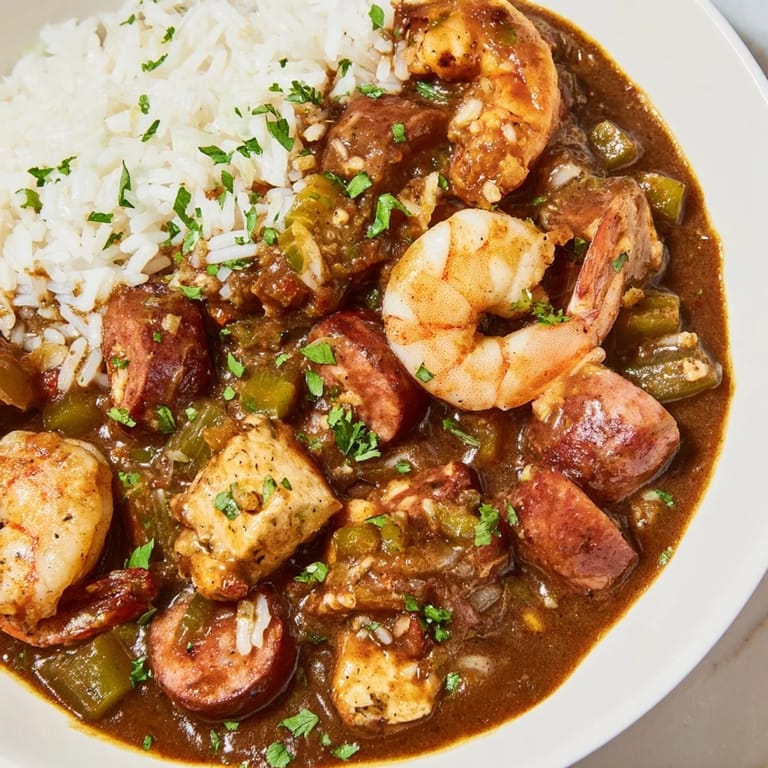
- Andouille sausage (300 g): Its smoky, slightly spiced richness is what gives gumbo its soul; don't skip it or substitute with mild sausage.
- Chicken thighs (400 g): Thighs stay tender and flavorful through the long simmer, unlike breasts which turn dry and stringy.
- Shrimp (300 g): Optional but worth including if you can; they add a briny sweetness and cook in just minutes at the end.
- Onion, bell pepper, celery: This holy trinity isn't tradition for show—each one brings a different sweetness and aromatic quality that builds complexity.
- Garlic (4 cloves): Minced fine so it dissolves into the sauce rather than sitting in chunks.
- Tomatoes (2 medium): Fresh or canned both work; they add acidity that brightens the richness of everything else.
- Vegetable oil and flour (80 ml and 80 g): The foundation of everything; this ratio creates a roux that's thick enough to coat but not gluey.
- Chicken or seafood stock (1.2 liters): Use good stock—this is where half your flavor comes from, so don't reach for the salty concentrate.
- Bay leaves, thyme, paprika, cayenne: These aren't just heat; they're layers of warmth that build gradually rather than hitting all at once.
- Worcestershire sauce and hot sauce: Worcestershire adds umami depth; hot sauce is optional but gives a final kick if your crowd likes it.
- Filé powder: Ground sassafras leaf that's traditionally stirred in at the end; it thickens and adds a subtle herbaceous note.
- Rice and garnishes: Fluffy rice is the cushion everything lands on; scallions and parsley add color and a fresh bite against the richness.
Tired of Takeout? 🥡
Get 10 meals you can make faster than delivery arrives. Seriously.
One email. No spam. Unsubscribe anytime.
Instructions
- Mise en place:
- Chop everything before you begin—onion, pepper, celery, garlic, tomatoes, sausage, chicken. This matters because once the roux starts, it demands constant attention and won't wait for you to find a cutting board.
- Build your roux:
- Heat oil in a heavy pot over medium heat, then whisk in flour slowly, stirring constantly for 15–20 minutes until it turns deep chocolate brown. Don't rush this; if it burns, it's bitter and you start over.
- The holy trinity arrives:
- Add onion, pepper, and celery to the roux; they'll sizzle and soften in about 5 minutes, releasing their aromatic oils into the brown base you've just built.
- Garlic moment:
- Stir in minced garlic and cook for just 1 minute—any longer and it browns and turns sharp.
- Proteins in:
- Add your sausage and chicken; let them brown slightly for 5 minutes, which adds a bit of caramelized flavor to the pot.
- Tomatoes and seasonings:
- Stir in tomatoes, bay leaves, thyme, paprika, cayenne, salt, and pepper; everything starts to smell like actual gumbo now.
- The stock joins:
- Gradually pour in stock while stirring so no lumps form; bring to a boil, then lower heat and simmer gently uncovered for 45 minutes, stirring occasionally so nothing sticks to the bottom.
- Shrimp finale:
- If using shrimp, add them in the last 10 minutes just until they turn pink and opaque—overcook them even slightly and they become rubbery.
- Final seasoning:
- Stir in Worcestershire and hot sauce if using; taste and adjust salt and cayenne until it feels right to you.
- Filé if desired:
- Remove from heat and stir in ½–1 tsp filé powder if you want extra thickening and that subtle sassafras flavor.
- Serve:
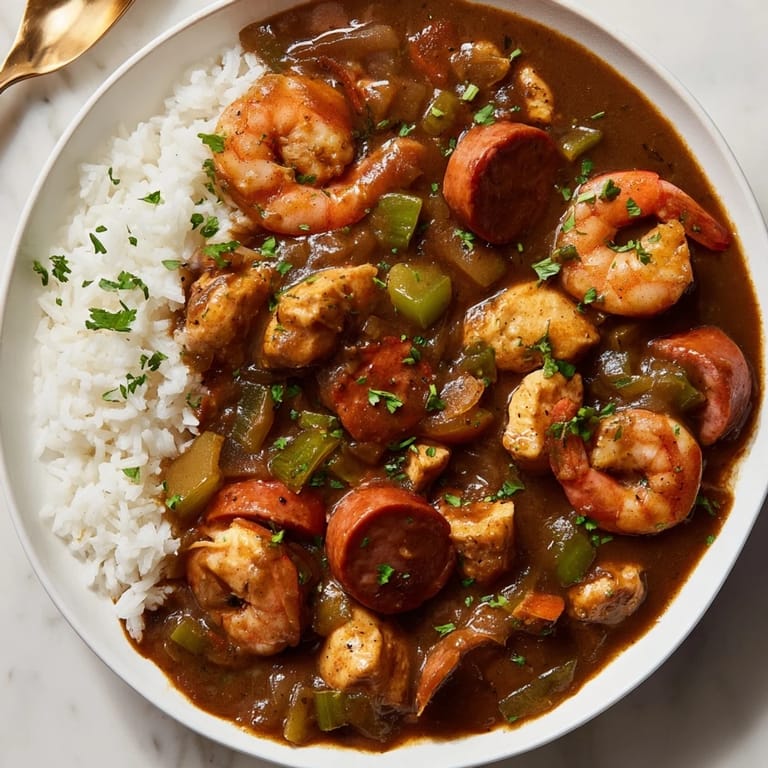
- Ladle over fluffy rice and garnish with sliced scallions and fresh parsley for color and a fresh note.
 Pin it
 I remember serving this to someone who grew up in New Orleans, and they took a spoonful, closed their eyes, and said quietly, 'You got it right.' That moment mattered more than any recipe card ever could—it wasn't about being traditional but about capturing something real and warm that connects people across tables.
Why This Dish Endures
Gumbo isn't flashy or quick, but it teaches you something important: that some of the best food comes from patience and layering small steps into something greater. The roux alone takes 20 minutes of constant stirring—time to think, breathe, smell the kitchen transforming. There's a rhythm to cooking gumbo that slows you down in a good way.
Adjusting for Your Taste
The beauty of gumbo is how flexible it is once you understand the foundation. Don't like spice? Use half the cayenne. Love seafood? Swap the chicken and sausage for crab, oysters, and extra shrimp. Dark roux and light roux both work; darker gives earthiness, lighter is more delicate. The holy trinity ratio is sacred, but everything else bends to what you have and what you love.
Serving and Storage
Gumbo actually improves when it sits overnight; flavors settle and deepen, so making it a day ahead is a gift to your future self. Reheat gently on the stove, adding a splash of stock if it's thickened too much. It keeps in the refrigerator for up to four days and freezes beautifully for months, though filé powder should be added fresh right before serving, not frozen in.
- Serve with crisp lager, chilled white wine, or even iced tea to cut through the richness.
- Offer hot sauce on the side so people can add their own heat without you guessing their spice tolerance.
- Rice should be fluffy and fresh, never day-old or mushy, so it stands up to the gumbo's velvety sauce.
 Pin it
 There's something grounding about a bowl of gumbo, the way it fills you and makes you feel tended to. Once you've made it once, you'll make it again.
Recipe Questions & Answers
- → What is the purpose of the roux in this stew?
The roux acts as a thickening agent and adds a deep, nutty flavor that forms the stew's rich base.
- → Can seafood options be substituted or combined?
Yes, shrimp can be added in the last 10 minutes or substituted with crab, oysters, or fish for variety.
- → How is the 'holy trinity' used in cooking?
Onion, bell pepper, and celery are sautéed early to build foundational aromatic flavors essential to the dish.
- → What role does filé powder play if added?
Filé powder thickens the stew and adds a unique earthiness, but should be stirred in off heat to prevent stringiness.
- → How should the seasoning be adjusted for heat?
Cayenne and hot sauce levels can be modified to suit desired spiciness, balancing smoky and pungent notes.