 Pin it
 There's something about a bowl that invites you to slow down. My friend Maya showed up at my apartment one Saturday afternoon with a container of roasted vegetables and this quiet confidence that we could turn them into something spectacular. She arranged everything with such care—the way a painter might organize colors on a palette—and suddenly lunch became this meditation on what nourishing food could look like. That afternoon taught me that the best bowls aren't about perfection; they're about letting each ingredient speak for itself while the dressing ties everything together.
I made this for a potluck last spring where everyone was trying to impress, and someone asked if I'd gone to culinary school. The tahini dressing had silenced the room for a moment—that kind of quiet that means people are tasting something they didn't expect. What they didn't know was that the magic wasn't in technique but in respecting each vegetable enough to let it caramelize properly.
Ingredients
- Mixed salad greens: The foundation matters, so choose something with personality—arugula brings peppery bite, spinach adds earthiness, romaine gives you structure to build on.
- Chickpeas: If using canned, that rinse is non-negotiable because the starch that clings to them will muddy your bowl's elegance.
- Zucchini: Cut them into pieces roughly the same size so they roast evenly and caramelize rather than steam themselves into mush.
- Red bell pepper: The sweetness that emerges from roasting balances the tang of olives and lemon beautifully.
- Red onion: Thinly slice it so the heat softens the sulfur bite and lets the natural sweetness come through.
- Eggplant: Dice it smaller than the zucchini since it shrinks more aggressively as it roasts.
- Olive oil: Use something you'd actually taste in a dressing, not the bargain bottle that tastes like regret.
- Dried oregano: This is the herb that says Mediterranean louder than anything else, so don't skimp or substitute.
- Smoked paprika: A small amount goes far—it adds depth without announcing itself.
- Avocado: Add this only when you're about to eat, otherwise oxidation will turn it that sad gray color.
- Kalamata olives: Pit them yourself if you have the patience; the flavor tastes brighter somehow.
- Hummus: Homemade is transcendent, but a good store-bought version saves you time on days when making it feels like too much.
- Tahini: The untoasted kind is milder and lets the lemon shine; toasted tahini brings earthiness if that's what your palate wants.
- Lemon juice: Fresh squeezed changes everything—bottled just doesn't have the same clarity.
- Garlic: One small clove, minced fine, so it emulsifies into the dressing rather than sitting there in chunks reminding you of its existence.
- Ground cumin: Just enough to whisper warmth, not shout spice.
Tired of Takeout? 🥡
Get 10 meals you can make faster than delivery arrives. Seriously.
One email. No spam. Unsubscribe anytime.
Instructions
- Heat your oven properly:
- Set it to 425°F and let it preheat fully—this matters more than you'd think because cold ovens cook vegetables to soggy disappointment.
- Prepare and season the vegetables:
- Toss your diced zucchini, bell pepper, sliced onion, and eggplant with olive oil and spices in a large bowl, making sure every piece gets coated without drowning in oil. Spread them on a baking sheet in a single layer, leaving space between pieces so they roast instead of steaming.
- Let them caramelize:
- After about 15 minutes, stir them gently so they color evenly on the other side. You're looking for patches of golden-brown, almost like they've been kissed by the heat. This takes 25-30 minutes total, and the wait is worth it.
- Make the tahini dressing while vegetables roast:
- Whisk tahini, fresh lemon juice, water, minced garlic, cumin, and a pinch of salt in a small bowl. If it's too thick to drizzle, add more water one splash at a time—it should flow but not be soup.
- Assemble your bowls:
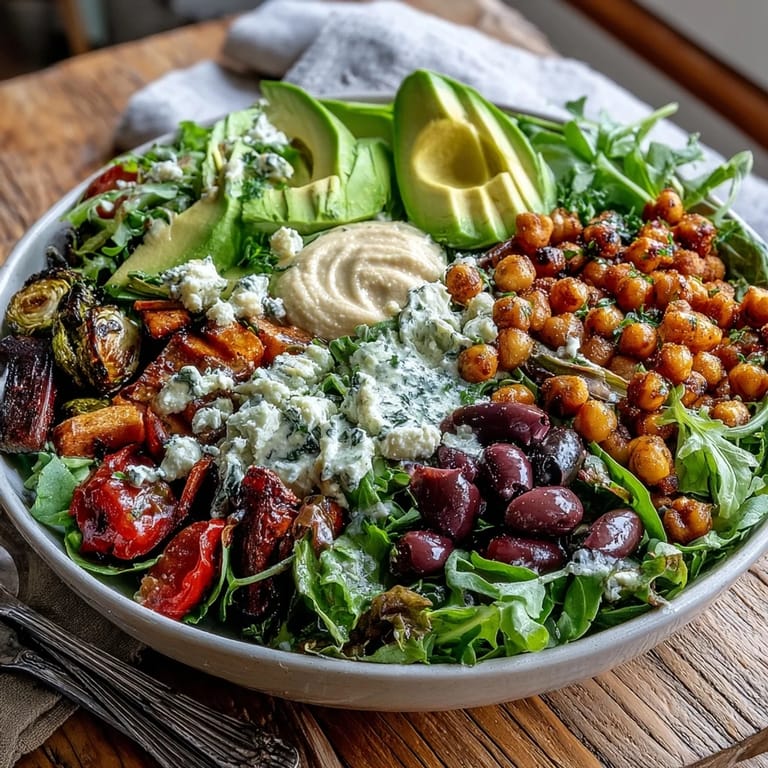
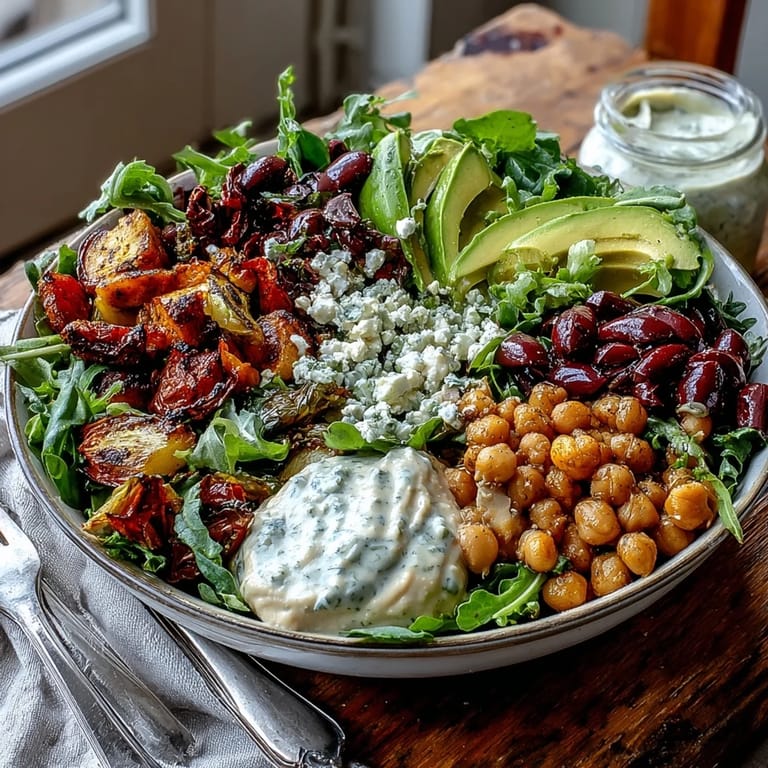
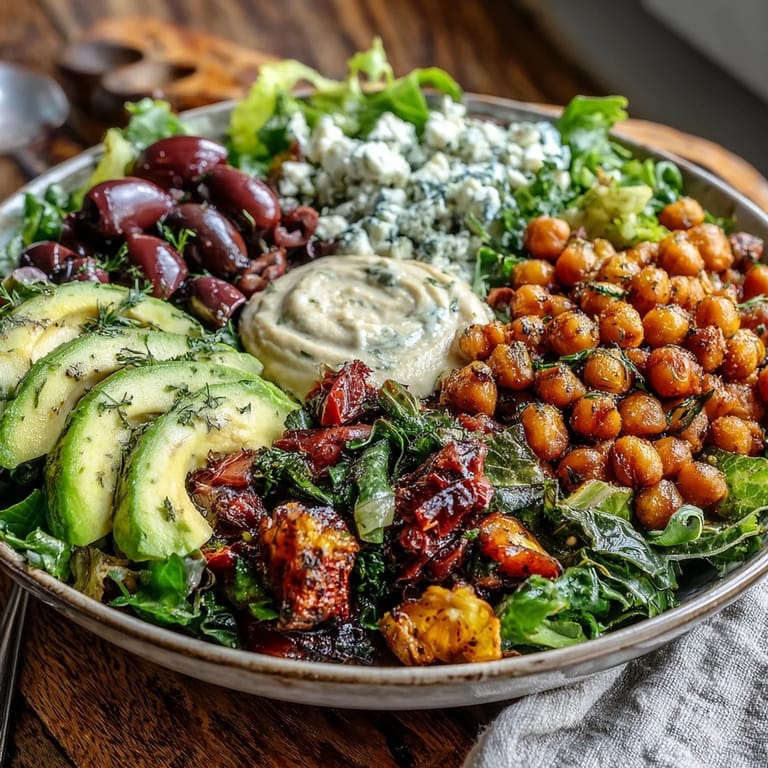
- Divide the mixed greens among four bowls, creating a bed that's generous enough to support everything else. Layer on the chickpeas, then the still-warm roasted vegetables (the heat helps everything meld together), then slices of avocado arranged like you mean it.
- Finish with intention:
- Scatter the halved olives across, add a generous dollop of hummus to one side of the bowl, and drizzle the tahini dressing last so it doesn't soak into the greens and disappear. Serve immediately.
 Pin it
 My partner brought me a bowl like this after I'd had a terrible day, and something about the simplicity of it—the way nothing was trying too hard—felt like the most thoughtful thing someone could have done. It tasted like care looks like nourishment tastes like someone saying: you deserve something good.
Why Roasting Changes Everything
There's a chemical reaction that happens when vegetables hit a hot oven—the natural sugars caramelize, water evaporates, and suddenly a plain zucchini becomes something with presence. Raw vegetables would be lighter, fresher, but they'd lack the depth that makes this bowl feel substantial enough to be a real meal. Roasting at high heat for the right amount of time is what transforms these ingredients from a collection of health foods into something people actually want to eat.
Building Your Perfect Bowl
There's freedom in the structure of a bowl—once you understand the base formula, you can rearrange things based on what's calling you that day. The greens anchor everything, the protein keeps you satisfied, the vegetables add texture and warmth, the avocado brings creaminess, the olives contribute umami saltiness, and the dressing ties it all into one coherent story. Every element serves a purpose, but nothing dominates.
Make It Work For Your Life
This recipe lives in a beautiful middle ground where it's simple enough for a weeknight but impressive enough for guests who actually care about food. You can prep components in advance, roasting vegetables on Sunday for bowls throughout the week, or build everything from scratch in under an hour. The flexibility means it adapts to what you have on hand and what your appetite demands on any given day.
- Brown rice or quinoa makes the bowl heartier and more filling if you're going for a complete meal replacement.
- Swapping chickpeas for white beans or lentils shifts the flavor slightly while keeping the protein intact.
- Toasted pine nuts or pumpkin seeds add that textural crunch that makes every bite more interesting.
 Pin it
 This bowl taught me that feeding yourself well doesn't require complicated techniques or exhausting ingredient lists—it just requires paying attention and respecting what you're making. When you slow down and arrange things with care, even a simple salad becomes something that nourishes more than just your body.
Recipe Questions & Answers
- → Can I prepare the vegetables ahead of time?
Yes, roast the vegetables up to 3 days in advance and store in an airtight container in the refrigerator. Reheat gently before assembling or serve at room temperature.
- → What can I substitute for tahini?
Cashew butter, almond butter, or Greek yogurt work well as alternatives. Adjust lemon juice and water to achieve desired consistency.
- → How can I add more protein?
Serve over cooked quinoa, brown rice, or lentils. You can also add grilled tofu, tempeh, or falafel for additional plant-based protein.
- → Is this bowl freezer-friendly?
Roasted vegetables freeze well for up to 3 months. Assemble bowls fresh and add dressing just before serving for best texture and flavor.
- → What other vegetables work in this bowl?
Roasted sweet potatoes, cauliflower, cherry tomatoes, or Brussels sprouts make excellent additions. Adjust cooking time based on vegetable density.