 Pin it
 There's something about assembling a Greek salad that transports me straight to a sunlit taverna, even if I'm standing in my own kitchen on a Tuesday afternoon. My neighbor once told me that the secret to any good salad isn't fancy ingredients—it's respecting what you have and not overthinking it. That advice stuck with me, especially on days when the farmers market has perfect tomatoes and I want to celebrate them without fussing. This bowl came together one summer when I was tired of heavy meals but still wanted something that felt substantial enough to serve friends. It's become my go-to when I need something ready in minutes that actually tastes like I care.
I made this for my sister's book club last spring, and she asked for the recipe before dessert even arrived. What struck me was watching people who normally order complicated entrees light up at something so simple and straightforward. Someone mentioned that it reminded them of a trip to Greece twenty years ago, and suddenly everyone was sharing stories about Mediterranean vacations. That's when I realized this salad does something special—it's not just food, it's a conversation starter that happens to be really good for you.
Ingredients
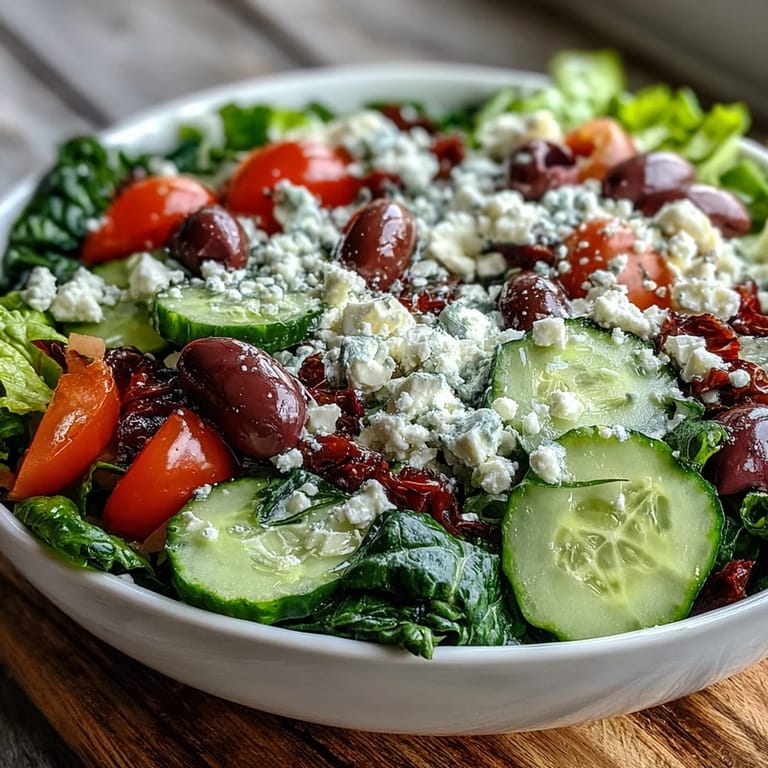
- Romaine lettuce: Six cups chopped gives you enough body to anchor everything else without wilting under the weight of the toppings, and it stays crisp longer than more delicate greens.
- Cherry tomatoes: Halving a cup of these sweet ones means you get flavor in every bite without having to struggle with large slices.
- Cucumber: One cup sliced adds a cool crunch that balances the tanginess of the vinaigrette perfectly.
- Red onion: Half a small one, thinly sliced, gives you bite and color without overwhelming the plate with sharpness.
- Feta cheese: Three-quarters cup crumbled is that creamy-salty element that makes this feel Mediterranean rather than just a vegetable bowl.
- Kalamata olives: Half a cup pitted and halved provides brininess and umami that ties everything together.
- Extra-virgin olive oil: Quarter cup is the foundation of any Greek dressing worth making, so don't skimp on quality here.
- Red wine vinegar: Two tablespoons gives you tang without harshness when balanced with the oil and mustard.
- Dried oregano: One teaspoon is your Mediterranean signature—it's what makes this taste authentically Greek instead of generic.
- Garlic: One minced clove adds depth without making your breath a problem or overwhelming the delicate vegetables.
- Dijon mustard: Half a teaspoon acts as an emulsifier so your vinaigrette actually holds together instead of separating.
- Salt and black pepper: Quarter teaspoon and an eighth teaspoon respectively—taste as you go because feta and olives already bring saltiness.
Tired of Takeout? 🥡
Get 10 meals you can make faster than delivery arrives. Seriously.
One email. No spam. Unsubscribe anytime.
Instructions
- Build your base:
- Chop your romaine and pile it into a large bowl—this is your canvas, so don't pack it down. The lettuce should feel loose and welcoming for what comes next.
- Add the vegetables:
- Toss in your halved cherry tomatoes, sliced cucumber, and those thin red onion slices, gently mixing so everything mingles. You want every forkful to have a chance at all the flavors.
- Crown it with cheese and olives:
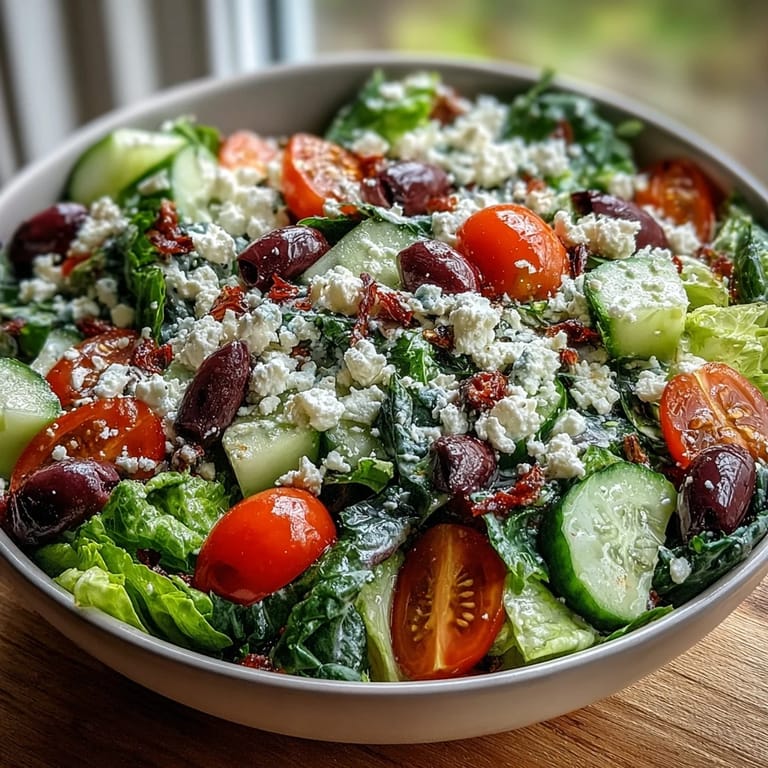
- Sprinkle your crumbled feta and halved olives across the top like you're finishing a painting. Don't stir yet—let them sit there waiting for the dressing to pull everything together.
- Whisk your vinaigrette:
- Pour the olive oil, red wine vinegar, minced garlic, oregano, and mustard into a small bowl or jar and whisk until it looks slightly creamy and unified. You'll feel the difference when the mustard does its job—that's your cue it's emulsifying properly.
- Dress and serve immediately:
- Drizzle your vinaigrette over the salad and toss it all together with a gentle hand, just until the dressing coats everything. Eat it right away while the lettuce is still crisp and the tomatoes haven't wept into the greens.
 Pin it
 My friend Marco once said that eating a proper Greek salad is like tasting a place, and I finally understand what he meant. There's something about the combination of textures and flavors that makes you feel transported, grounded, and satisfied all at once.
Making It Your Own
While this recipe is perfect as written, I've found that small additions can make it feel fresh and personal. Bell peppers add color and sweetness, fresh dill brings an herbaceous note that pairs beautifully with the oregano, and a handful of chickpeas turns it into something you can call lunch without apology. The framework stays the same—crisp vegetables, creamy cheese, briny olives, sharp dressing—but you get to decide what story you want to tell with it.
The Vinaigrette Magic
This vinaigrette is genuinely worth mastering because once you understand how it works, you'll realize it's the secret to almost any salad worth making. The ratio of oil to vinegar, the role of the mustard, the way the garlic and oregano work together—these aren't arbitrary. I've made batches where I got excited and doubled the vinegar, and the result was sharp enough to make my face pucker. Other times I've been lazy with the whisking and ended up with separated oil sliding around the greens instead of coating them.
Timing and Storage
This salad is best eaten the moment you finish tossing it, but life isn't always that neat. If you need to make it ahead, keep the dressing separate and dress the salad right before serving—I've learned to pour the vinaigrette into a jar with a tight lid so I can shake it back together if it separates, and I always label it with a date because I've definitely forgotten about dressings in the back of my fridge. The chopped vegetables will keep for a day or two in an airtight container, and the feta and olives are fine sitting out for longer than you might expect.
- Make the vinaigrette up to three days ahead and shake before using.
- Chop vegetables the morning of serving for maximum crispness and flavor.
- Add the dressing only when you're ready to eat, otherwise your beautiful salad turns into a sad puddle.
 Pin it
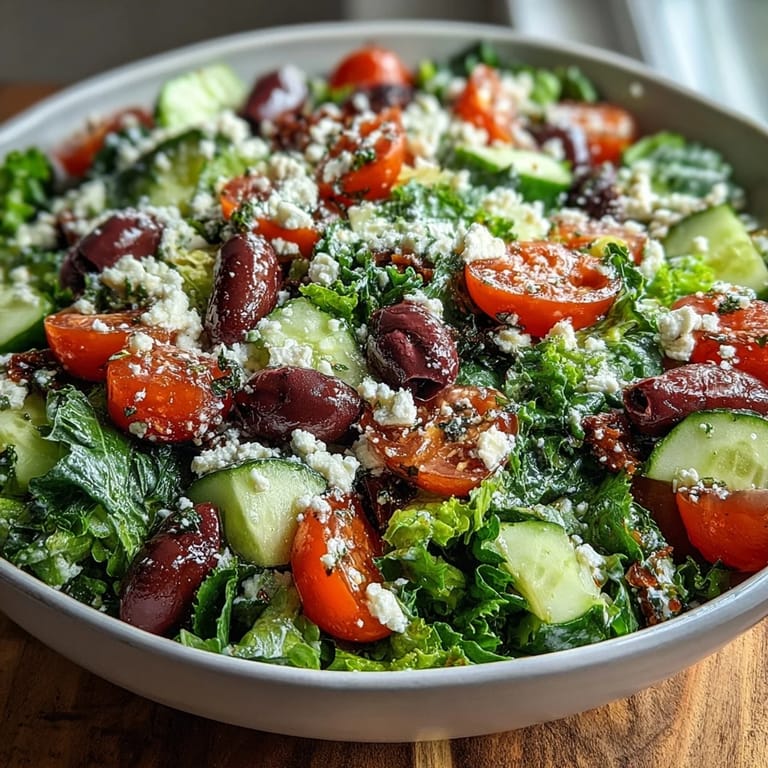
 This Greek salad has become my answer to the question: what do you make when you want to feel healthy, eat something delicious, and spend almost no time in the kitchen? It's proof that simple ingredients, treated with respect and whisked together with intention, can create something that feels like more than the sum of its parts.
Recipe Questions & Answers
- → How long does Greek salad stay fresh?
For optimal texture and flavor, enjoy immediately after tossing with dressing. Undressed vegetables can be refrigerated up to 2 days in an airtight container.
- → Can I make this dairy-free?
Yes, substitute regular feta with vegan feta alternatives or omit cheese entirely and add extra olives for that savory element.
- → What vegetables work well in this bowl?
Bell peppers, radishes, or shredded carrots add great crunch and color. Fresh herbs like dill or parsley also complement the Mediterranean flavors.
- → How do I make the vinaigrette ahead?
Whisk ingredients together and store in a sealed jar for up to a week. Shake well before drizzling and bring to room temperature for best consistency.
- → What proteins pair nicely with this salad?
Grilled chicken, shrimp, or chickpeas transform this into a satisfying main course. Lamb or falafel also work beautifully with these Mediterranean flavors.
- → Can I use different olives?
While Kalamata olives are traditional, black olives or green olives work too. Just adjust quantities since saltiness varies between varieties.