 Pin it
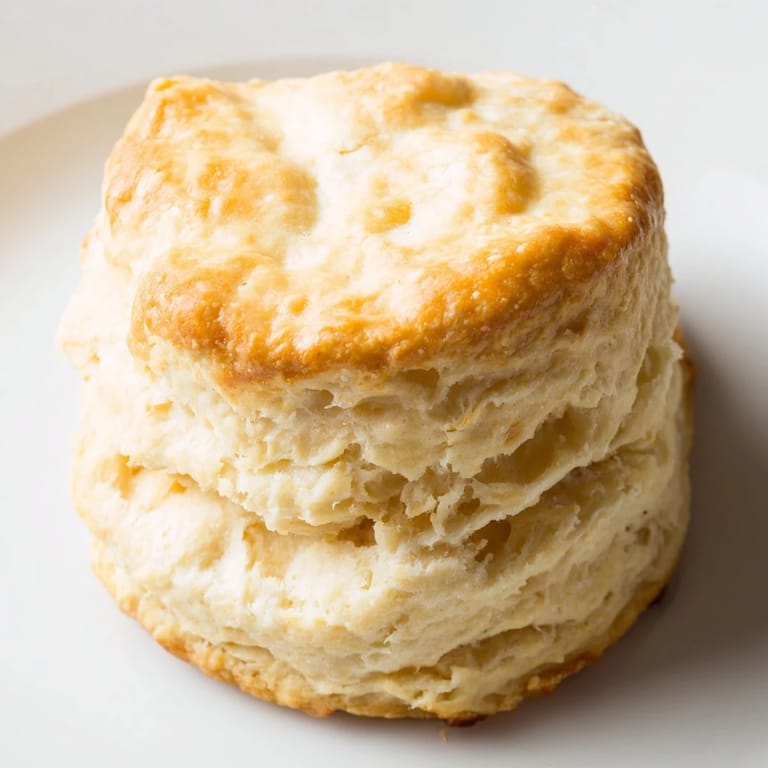
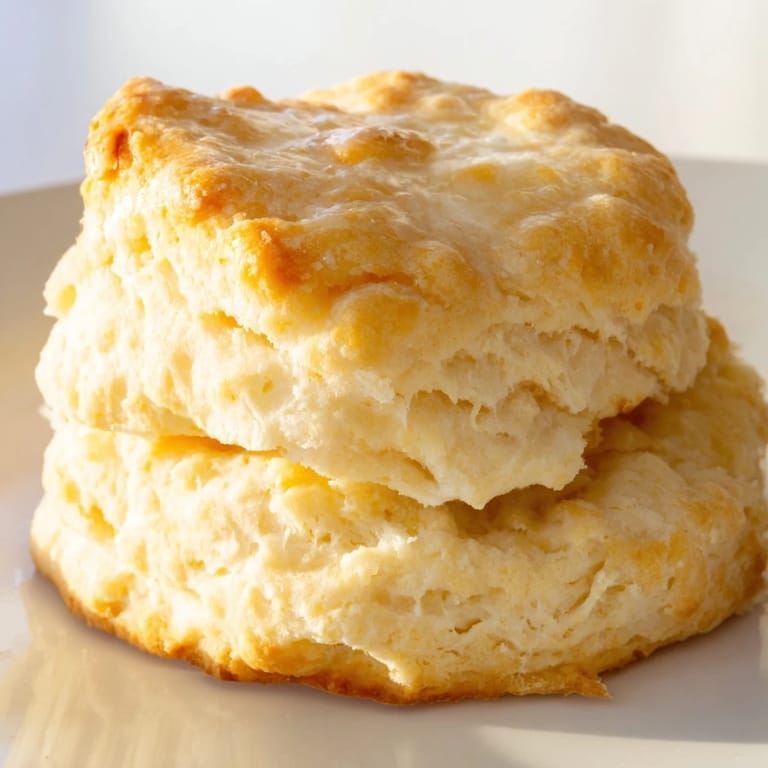
 There's something about the sound of a biscuit cutter pressing through dough that still makes me pause and pay attention. Years ago, my grandmother handed me a worn metal cutter and said the secret wasn't in the fancy technique—it was in keeping everything cold and not overthinking it. The first batch I made while really listening to that advice came out impossibly tall and golden, and I've been chasing that feeling ever since. These buttermilk biscuits became my answer to almost every meal, whether tucked beside a bowl of gravy or split open for jam on a quiet morning.
I made these for a Sunday dinner with friends who hadn't seen each other in months, and someone split one open, took a bite, and just closed their eyes. No words needed. That's when I realized these biscuits do something beyond being delicious—they create a moment where everyone slows down and actually tastes what's in front of them.
Ingredients
- All-purpose flour (2 cups): The foundation that needs to be whisked with the leavening agents so your biscuits rise evenly and don't end up dense.
- Baking powder and baking soda (1 tablespoon and ½ teaspoon): These two work together to give you lift and tenderness; don't skip the baking soda, it does something the powder alone can't do.
- Fine sea salt (1 teaspoon): Brings out the butter flavor and balances the sweetness.
- Granulated sugar (1 tablespoon): Just enough to support the rise and add subtle richness without making these sweet.
- Cold unsalted butter, cubed (½ cup): This is non-negotiable—the coldness is what creates the flaky layers, so keep it in the freezer until the last moment.
- Cold buttermilk (¾ cup, plus extra for brushing): The acidity reacts with the baking soda and keeps everything tender; cold temperature matters as much as being buttermilk specifically.
Tired of Takeout? 🥡
Get 10 meals you can make faster than delivery arrives. Seriously.
One email. No spam. Unsubscribe anytime.
Instructions
- Get everything ready:
- Heat your oven to 425°F and line a baking sheet with parchment paper. Pull your butter from the cold and cut it into small cubes—you want them to stay separate and frosty.
- Build your dry base:
- Whisk together flour, baking powder, baking soda, salt, and sugar in a large bowl, making sure everything is evenly distributed so your biscuits rise uniformly.
- Work in the butter:
- Scatter the cold butter cubes over the flour mixture and use a pastry cutter or your fingertips to work them in quickly until the mixture looks like coarse breadcrumbs with some pea-sized pieces still visible. Keep this step brisk—warm hands and a warm kitchen are the enemies here.
- Bring it together gently:
- Make a well in the center, pour in the cold buttermilk, and stir with a fork just until the dough comes together. Stop as soon as you don't see dry flour; overmixing toughens biscuits.
- Build those layers:
- Turn the dough onto a lightly floured surface and gently pat it into a rectangle about ½ inch thick. Fold it in half, pat it out again, and repeat this fold-and-pat two more times—this is what creates those beautiful flaky layers.
- Cut with intention:
- Pat the dough to 1 inch thick and use a 2½ inch biscuit cutter to cut straight down without twisting, which seals the edges and prevents them from rising properly. Gather scraps gently and cut again.
- Arrange and brush:
- Place biscuits close together on your prepared baking sheet and brush the tops lightly with buttermilk for that gorgeous golden color.
- Bake until golden:
- Bake for 13 to 15 minutes, watching for them to rise tall and turn a deep golden brown. You'll know they're done when the aroma fills your kitchen and you can't wait another second.
- Rest briefly before serving:
- Let them cool for a few minutes so the steam settles, then serve them warm—this is when they're at their absolute best.
 Pin it
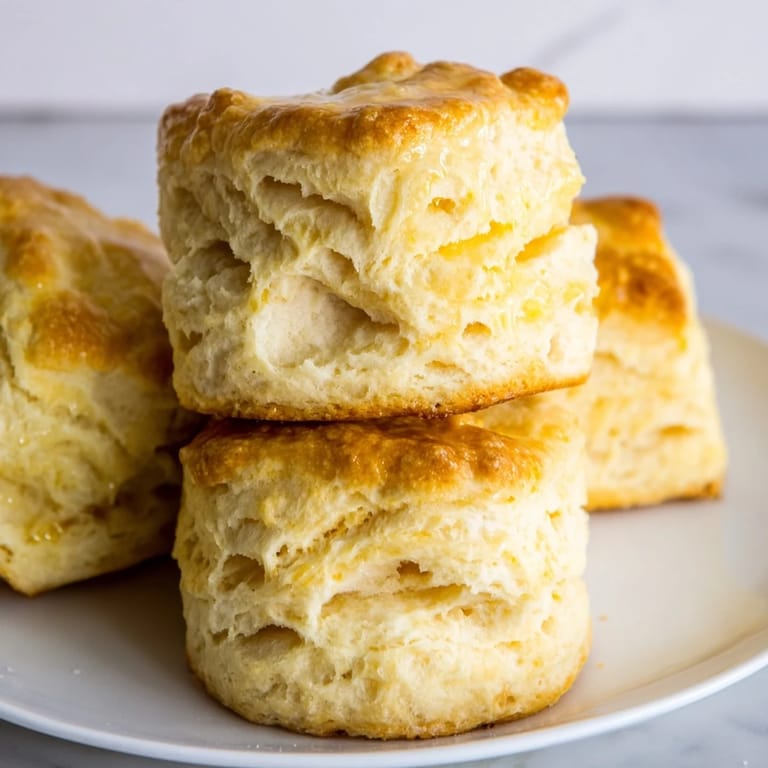
 Years ago I made a batch without the folding step because I thought it was unnecessary, and they came out flat and uniform. The minute I added those folds, I understood: you're not just mixing, you're creating pockets of butter that steam and separate into layers. That moment changed everything about how I approach biscuits.
Buttermilk Is Not Optional
The acidity in buttermilk reacts with the baking soda to create lift and tenderness that regular milk simply can't replicate. If you're out of buttermilk, make a substitute by stirring 2 teaspoons of lemon juice or vinegar into ¾ cup of regular milk and letting it sit for 5 minutes—it works, but fresh buttermilk from the dairy aisle is always better. The coldness matters as much as the ingredient itself, so keep it in the fridge until you're ready to pour.
Temperature Control Is Everything
Every element—the butter, the buttermilk, even your hands if they run warm—should be as cold as possible without being frozen. A warm kitchen or warm hands will melt the butter before it gets a chance to create those pockets, and your biscuits will suffer for it. If your kitchen is particularly warm, chill your mixing bowl and work quickly. I learned this the hard way on a summer afternoon when I wondered why my biscuits looked tired before they even went in the oven.
Ways to Make These Your Own
Once you master the basic recipe, these biscuits become a canvas for your own flavors and moods. Fold in sharp cheddar for savory biscuits that pair beautifully with chili, or add fresh herbs like thyme, rosemary, or dill depending on what you're serving alongside them. A pinch of black pepper, a touch of garlic powder, or even a hint of smoked paprika can shift the entire personality of the recipe. The technique stays the same—only the additions change.
- Add ½ cup of finely grated sharp cheddar or fresh herbs directly into the dry ingredients before adding the butter.
- A small pinch of cayenne or smoked paprika brings depth without being obvious.
- Keep the additions minimal so the buttery, flaky texture remains the star of the show.
 Pin it
 These biscuits have become my reliable comfort—the thing I make when I want to feel capable and generous at the same time. They're proof that simple ingredients, cold hands, and a moment of patience create something that tastes like care.
Recipe Questions & Answers
- → How do cold butter and folding affect the texture?
Cold butter creates pockets of steam during baking, leading to flaky layers. Folding the dough multiple times builds these layers, giving a tender, flaky crumb.
- → Can I substitute buttermilk in this biscuit mix?
Yes, mix ¾ cup milk with 2 teaspoons lemon juice or vinegar and let it sit for 5 minutes. This mimics buttermilk’s acidity and thickness.
- → What is the ideal oven temperature for baking?
Preheat the oven to 220°C (425°F) for best rise and golden crust. Baking biscuits at high heat ensures proper puff and flaky texture.
- → Why should I avoid overmixing the dough?
Overmixing develops gluten which can toughen biscuits. Stir gently until combined for tender, light results.
- → Can I add other ingredients for variation?
Yes, grated cheddar, fresh herbs, or spices like black pepper can be folded into the dough to add flavor and interest.