 Pin it
 There's something magical about the moment when butternut squash season arrives at the farmers market. I walked past a vendor's stall one October morning, drawn by the warm amber glow of their squash pile, and without thinking grabbed two perfect specimens. That evening, while peeling one, the kitchen filled with this earthy, sweet aroma that made me wonder: what if I combined this with apples? The result was this silky soup, and it's been my go-to ever since.
I made this for my sister last November when she was going through a rough patch, and she texted me the next day asking for the recipe. Apparently she'd had it three times already. That's when I realized this soup does something beyond nourish—it quiets the mind and settles something deep. She now makes it in her own kitchen, and somehow that small act of passing it along felt like the recipe had done its real job.
Ingredients
- Butternut squash (1 medium, about 2 lbs): The star player—its creamy texture becomes almost butter-like when blended, which is where the magic happens.
- Apples (2 medium, Gala or Fuji work best): These add brightness and natural sweetness that balances the squash's earthiness without needing a sugar jar nearby.
- Yellow onion (1 medium, chopped): The flavor foundation that builds gradually as it softens, creating the soup's savory backbone.
- Garlic (2 cloves, minced): Just enough to add depth without overpowering the delicate apple-squash conversation.
- Vegetable broth (4 cups): Use something you'd actually drink straight—quality broth makes the difference between okay and outstanding.
- Apple cider or juice (1/2 cup): This enhances the apple notes and adds a subtle tartness that keeps the soup from feeling one-dimensional.
- Heavy cream or coconut milk (1/2 cup, optional): Transforms the soup from nice to velvety, though it's lovely without if you prefer lighter eating.
- Cinnamon, nutmeg, ginger (1/2 tsp, 1/4 tsp, 1/4 tsp): These three spices work together like a jazz trio—each one distinct but harmonizing perfectly.
- Salt and pepper: Season at the end, tasting as you go, since broth saltiness varies.
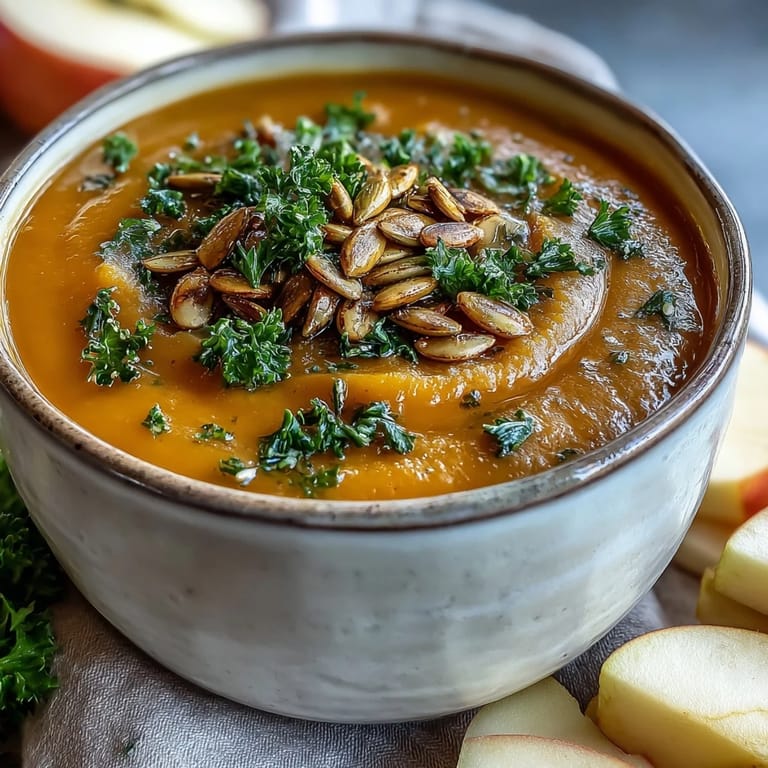
- Pumpkin seeds and parsley (for garnish): The seeds add a satisfying crunch that makes each spoonful interesting.
Tired of Takeout? 🥡
Get 10 meals you can make faster than delivery arrives. Seriously.
One email. No spam. Unsubscribe anytime.
Instructions
- Start with the aromatics:
- Heat olive oil in a large pot over medium heat and add your chopped onion. Let it sizzle and soften for 4 to 5 minutes—you're listening for a gentle sizzle, watching for the onion to turn translucent and fragrant. This slow start builds flavor.
- Build the flavor base:
- Stir in the minced garlic, squash cubes, and apple pieces. Cook for another 3 minutes, stirring occasionally so everything gets coated in the warm oil. You'll start smelling the apples as they warm up.
- Bloom the spices:
- Add your cinnamon, nutmeg, and ginger, stirring constantly for about 30 seconds so the spices toast slightly and release their essential oils. This small step is what transforms this from ordinary to autumn in a bowl.
- Simmer until tender:
- Pour in the vegetable broth and apple cider, bring everything to a boil, then reduce the heat and let it simmer uncovered for 25 to 30 minutes. You'll know it's ready when the squash breaks apart easily with a fork and the apples have surrendered completely.
- Create the silky texture:
- Remove from heat and use an immersion blender to purée the soup right in the pot, or carefully work in batches with a regular blender. Blend until completely smooth and creamy—no lumps, just velvety richness.
- Finish with creaminess:
- Stir in the cream or coconut milk if using, then taste and season with salt and pepper. A light hand with salt is wise since your broth may already carry some.
- Serve with warmth:
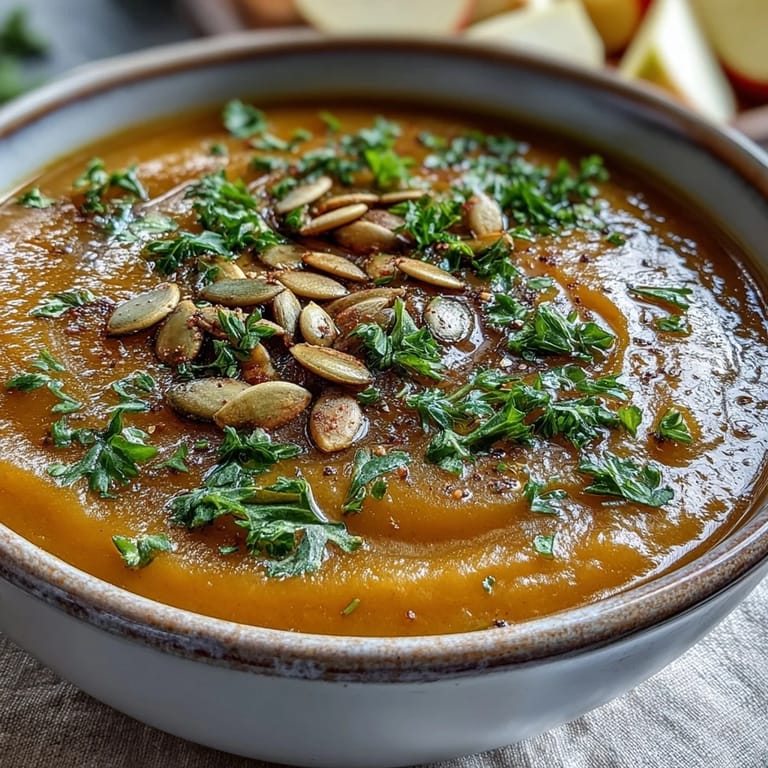
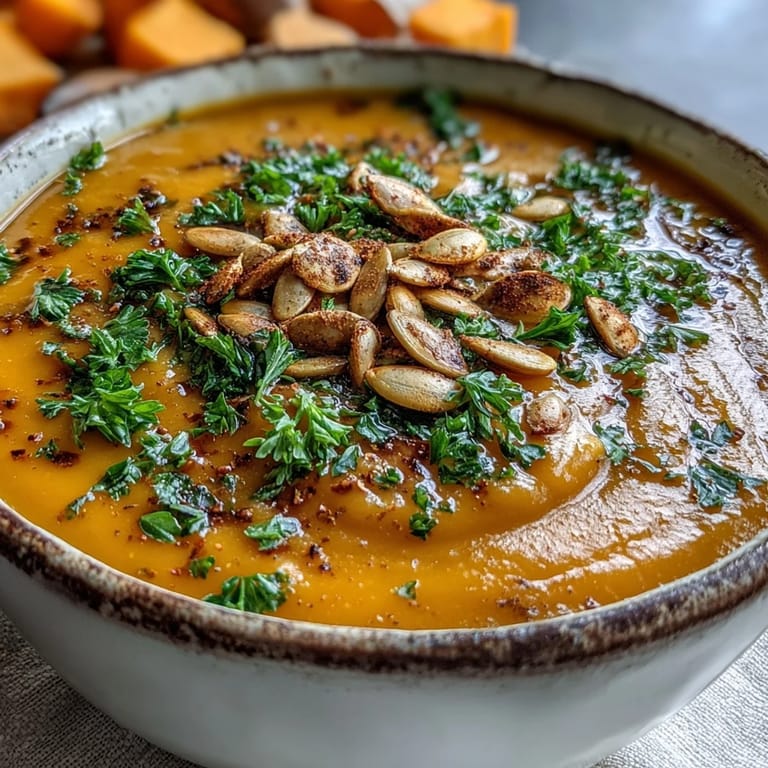
- Gently reheat if needed, then ladle into bowls and crown each one with a scatter of toasted pumpkin seeds and fresh parsley. The seeds add visual appeal and that satisfying bite.
 Pin it
 I once served this soup to someone who swore they hated butternut squash, and they drained their bowl without realizing what they were eating. The apples did that—they were the gateway that made everything else palatable, even beautiful. That's when I understood that this recipe works not just because the flavors pair well, but because together they tell a story neither ingredient could tell alone.
The Apple-Squash Partnership
The genius of this soup lives in how apples soften squash's earthiness. Squash wants to be hearty and grounding, but apples bring levity and brightness. When you blend them together, something almost magical happens—the apples don't disappear, they distribute their sweetness and slight tartness throughout, making the entire bowl feel balanced rather than heavy. I learned this through experimentation, trying different apple varieties until I found that Gala and Fuji offered both sweetness and enough structure to stand up to the cooking time without turning into mush.
Spice as Seasoning
Many people treat autumn spices as decoration, sprinkling them in at the very end and wondering why they taste flat. I made that mistake once early on, and the difference was immediate when I switched to blooming them in hot oil before the liquid went in. Now the cinnamon, nutmeg, and ginger aren't just flavoring—they're essential to the soup's personality, warmth, and that inexplicable comfort factor that makes people ask for seconds.
Variations and Personal Touches
This soup is forgiving enough to play with, which is part of what I love about it. Some mornings I make it exactly as written; other times I'm feeling adventurous and test boundaries. A tiny pinch of cayenne adds heat without announcing itself, while a splash of good balsamic vinegar brings unexpected sophistication. Roasting the squash cubes beforehand deepens everything, making it taste less like an easy weeknight soup and more like something you plotted for hours.
- Roast butternut squash cubes at 400°F for 20 minutes before adding them if you want richer, caramelized flavor.
- Stir in a pinch of cayenne pepper for warmth that doesn't make itself obvious.
- Serve alongside crusty bread or a sharp green salad to balance the soup's sweetness.
 Pin it
 This soup has become my answer to a lot of questions—what's for dinner tonight, what do I bring to someone who needs comfort, what makes my kitchen smell like fall. It's proof that simple ingredients, treated with attention, become something remarkable.
Recipe Questions & Answers
- → Can I make this soup ahead of time?
Absolutely. This soup actually tastes better the next day as flavors have time to meld. Store in an airtight container in the refrigerator for up to 4 days. Reheat gently over medium-low heat, adding a splash of broth if needed to adjust consistency.
- → How do I achieve the smoothest texture?
An immersion blender works wonderfully right in the pot. If using a countertop blender, purée in batches and never fill more than halfway. For extra silkiness, strain through a fine-mesh sieve after blending. Roasting the squash first also creates a deeper, smoother result.
- → What apples work best?
Sweet varieties like Gala, Fuji, or Honeycrisp complement the squash beautifully. They break down nicely during cooking and add natural sweetness. Avoid tart Granny Smith apples as they can make the final dish too acidic.
- → Can I freeze this soup?
Yes, freeze for up to 3 months. Let cool completely, then transfer to freezer-safe containers leaving 1 inch of headspace for expansion. Thaw overnight in the refrigerator before reheating. If you added cream, the texture may change slightly—simply whisk while reheating.
- → What can I serve alongside this soup?
Crusty bread, warm rolls, or homemade croutons are perfect for dipping. A simple green salad with vinaigrette balances the sweetness. For a heartier meal, pair with a grilled cheese sandwich or roasted chicken.
- → How can I add more protein?
Stir in white beans or chickpeas during the last 10 minutes of simmering. Top with toasted pumpkin seeds, sunflower seeds, or a dollop of Greek yogurt. Serving with protein-rich sides like quinoa salad or hard-boiled eggs also works well.