 Pin it
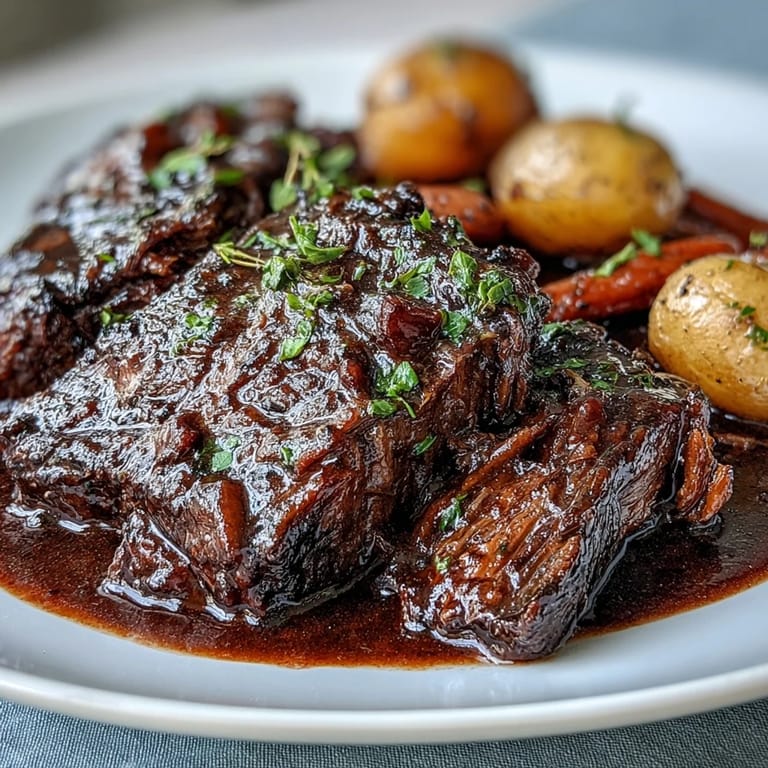
 The smell of seared beef always takes me back to Sunday afternoons when the house would fill with that deep, caramelized aroma. I used to think pot roast was intimidating, something only grandmothers could pull off, until I realized it's actually one of the most forgiving dishes you can make. You brown the meat, toss everything into one pot, and let time do the work. The first time I made this, I was shocked at how little hands-on effort it required for something that tasted like I'd been cooking all day. Now it's my go-to when I want the house to smell like home.
I made this for my family during a snowstorm once, and it became the meal everyone asked about for months afterward. There's something about the way the beef falls apart with just a fork that makes people lean back in their chairs and sigh. My brother, who usually inhales his food without comment, actually paused mid-bite to ask what I did differently. I hadn't done anything special, just followed the steps and let the oven work its magic. That's when I knew this recipe was a keeper.
Ingredients
- Beef chuck roast: Look for good marbling, those white streaks of fat are what keep the meat juicy and tender during the long braise.
- Kosher salt and black pepper: Season generously, the beef needs it to develop a flavorful crust when you sear it.
- All-purpose flour: A light dusting helps create that beautiful brown crust and also thickens the gravy slightly as it cooks.
- Olive oil and butter: The combination gives you a high smoke point plus rich flavor for searing.
- Yellow onion: Cut into thick wedges so they hold their shape and add sweetness to the braising liquid.
- Garlic: Smash and peel them, they'll melt into the sauce and add depth without burning.
- Carrots and celery: Cut them large so they don't turn to mush, they should be tender but still have some bite.
- Baby potatoes: Waxy potatoes hold up better than russets, they soak up the gravy without falling apart.
- Tomato paste: Cooking it for a minute or two darkens it and brings out a deeper, almost sweet flavor.
- Dry red wine: Use something you'd actually drink, it adds acidity and complexity to the sauce.
- Beef broth: Low-sodium is key so you can control the saltiness as the liquid reduces.
- Worcestershire sauce: Just a teaspoon adds umami and a subtle tang.
- Fresh rosemary and thyme: Fresh herbs are worth it here, they perfume the whole pot as it braises.
- Bay leaves: Don't skip these, they add a subtle earthy note that rounds out the flavors.
- Cornstarch slurry: Optional, but it turns the braising liquid into a silky gravy in minutes.
- Fresh parsley: A handful of chopped parsley at the end brightens everything up.
Tired of Takeout? 🥡
Get 10 meals you can make faster than delivery arrives. Seriously.
One email. No spam. Unsubscribe anytime.
Instructions
- Prep the beef:
- Pat the roast completely dry with paper towels, moisture is the enemy of a good sear. Season it all over with salt and pepper, then dust lightly with flour and shake off the excess.
- Sear the meat:
- Heat the oil and butter in your heaviest pot over medium-high heat until shimmering. Lay the roast in carefully and let it sit undisturbed for 4 to 5 minutes per side until it's deeply browned, don't forget the edges.
- Cook the aromatics:
- Remove the beef and lower the heat to medium, add a bit more oil if the pot looks dry. Toss in the onion wedges and cook until they soften and turn golden, then add the garlic and stir for about a minute until fragrant.
- Build the base:
- Stir in the tomato paste and let it cook for a minute or two until it darkens and smells sweet. Pour in the red wine and scrape up all those beautiful browned bits stuck to the bottom, let it bubble for a few minutes.
- Add the liquid:
- Pour in the beef broth and Worcestershire sauce, stirring everything together. Toss in the rosemary, thyme, and bay leaves, then nestle the beef back into the pot along with any juices from the plate.
- Braise low and slow:
- Bring it to a gentle simmer, cover tightly, and either lower the heat or slide it into a 300°F oven. Let it cook undisturbed for about an hour and a half.
- Add the vegetables:
- Flip the roast over carefully, then tuck the carrots, celery, and potatoes around it, pushing them into the liquid. Cover again and cook for another hour and a half to two hours until everything is fork-tender.
- Finish the sauce:
- Transfer the beef and vegetables to a platter and tent with foil. Skim off any excess fat from the surface of the liquid, then bring it to a simmer and whisk in the cornstarch slurry if you want a thicker gravy.
- Serve:
- Shred or slice the beef against the grain, arrange it over the vegetables, and spoon that gorgeous sauce all over the top. Scatter fresh parsley over everything and serve it hot.
 Pin it
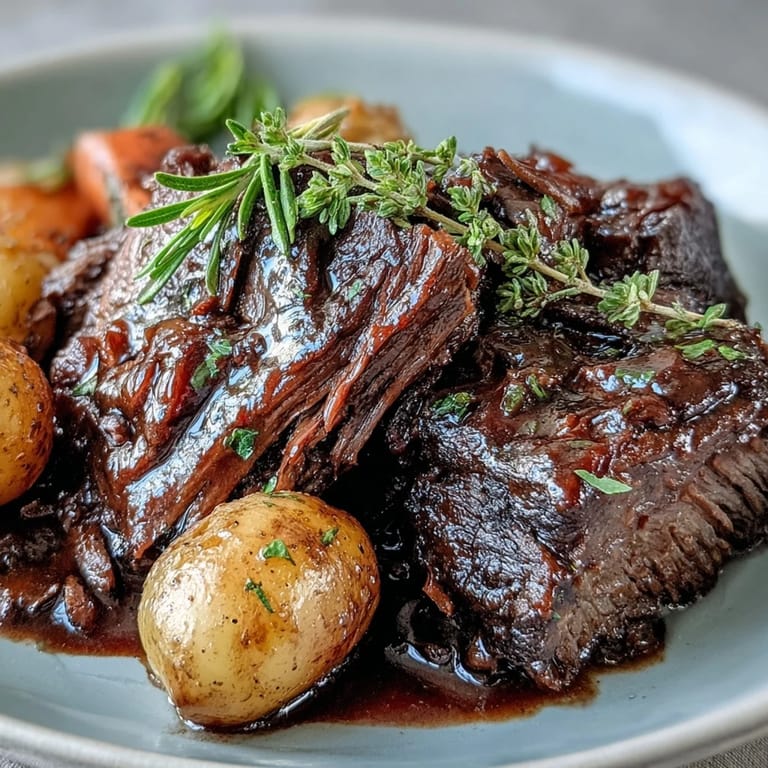
 The first time I served this to friends, one of them asked if I'd been secretly trained as a chef. I laughed and told her it was just patience and a good pot. We sat around the table for hours that night, soaking up gravy with crusty bread and talking until the candles burned down. That's what this dish does, it slows everything down and reminds you that some things are worth the wait.
How to Get the Best Sear
A proper sear isn't just about color, it's about building layers of flavor that will carry through the entire dish. Make sure your pot is hot enough that a drop of water sizzles and evaporates immediately. Pat the beef completely dry, any moisture will steam the meat instead of browning it. Don't move the roast around once it hits the pan, let it sit and develop that dark crust. If you're tempted to skip this step, don't, it's the foundation of everything that comes after.
Choosing the Right Cut
Chuck roast is the classic choice because it has enough fat and connective tissue to stay moist during a long braise. Blade roast works just as well and sometimes has even more marbling. Avoid lean cuts like sirloin, they'll dry out and turn stringy no matter how long you cook them. Look for a roast with visible streaks of fat running through it, that's your insurance policy for tenderness. If you can, ask your butcher to leave it in one large piece rather than cutting it into smaller chunks.
Storage and Leftovers
Pot roast is one of those rare dishes that actually improves after a night in the fridge. The flavors deepen and the sauce thickens as it cools. Store the beef and vegetables in an airtight container with enough sauce to keep everything moist, it'll last up to four days. You can also freeze it for up to three months, just thaw it overnight in the fridge and reheat gently on the stovetop. I love using leftovers for sandwiches, shredded over rice, or even tucked into tacos with a little fresh cilantro.
- Reheat gently over low heat so the beef doesn't dry out.
- Add a splash of broth if the sauce has thickened too much.
- Leftovers make an incredible French dip sandwich with melted cheese.
 Pin it
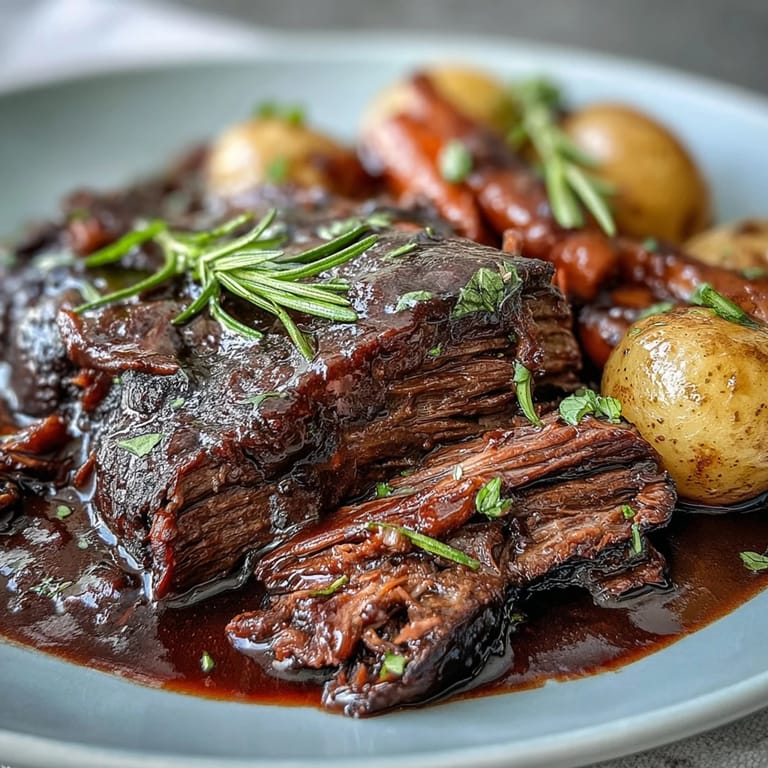
 This is the kind of meal that makes your kitchen feel like the heart of the house. Serve it with good bread, pour yourself a glass of whatever you cooked with, and enjoy every slow, savory bite.
Recipe Questions & Answers
- → What cut of beef works best for pot roast?
Chuck roast or blade roast are ideal choices because they contain abundant marbling and connective tissue. As the meat slow-braises, these tissues break down, creating incredibly tender, succulent beef that falls apart easily.
- → Can I make this in a slow cooker?
Absolutely. After searing the beef and sautéing the aromatics, transfer everything to your slow cooker. Cook on low for 8–10 hours or high for 5–6 hours, adding the vegetables halfway through cooking to maintain their texture.
- → How do I get thicker gravy?
For a thicker sauce, create a slurry by mixing 1½ tablespoons cornstarch with cold water, then stir it into the simmering liquid. Cook for 2–3 minutes until the gravy reaches your desired consistency, thinning with additional broth if needed.
- → Can I substitute the red wine?
Yes, you can replace the red wine with additional beef broth for a non-alcoholic version. While wine adds depth and complexity, the dish remains delicious with just broth, especially if you brown the meat thoroughly.
- → Why is browning the meat important?
Searing the roast creates a flavorful crust through the Maillard reaction, adding deep, savory notes to the final dish. This browning step is essential for building the rich, complex flavor profile that makes pot roast so satisfying.
- → How long does leftovers keep?
Stored in an airtight container in the refrigerator, leftovers last 3–4 days and actually develop more flavor overnight. The dish also freezes well for up to 3 months, making it excellent for meal prep.