 Pin it
 The first time I truly understood what people meant by fall-off-the-bone ribs was at my uncle's backyard cookout on a sweltering July afternoon. He'd been talking about his low-and-slow method for weeks, and when I bit into those tender, smoky strips, I realized he wasn't exaggerating—the meat practically dissolved on my tongue. That day changed how I approached ribs entirely, teaching me that patience and a good glaze are everything.
I remember the sound of my partner's satisfied sigh when she first tried these ribs at a dinner party we threw last summer. She'd been skeptical about homemade ribs, convinced they'd be dry or tough, but watching her reach for seconds without saying a word told me everything I needed to know about whether this recipe worked.
Ingredients
- Pork or beef ribs (1.5–2 kg or 3–4 lbs): The backbone of the dish—I've found that pork ribs are slightly more forgiving, but beef ribs deliver a deeper, richer flavor if you're willing to give them the same patient treatment.
- Olive oil (2 tbsp): This seems small, but it helps the dry rub cling to every surface and prevents sticking.
- Brown sugar (2 tbsp): The sweetness caramelizes during cooking, creating that glossy, appealing exterior.
- Smoked paprika (1 tbsp): This is where the magic happens—it adds depth and a whisper of smoke even before the oven does its work.
- Garlic powder, onion powder, black pepper, salt (1 tsp each): The supporting cast that rounds out the flavor profile without overwhelming the meat.
- Cayenne pepper (½ tsp, optional): Add this only if you want a gentle heat that lingers at the back of your throat.
- Barbecue sauce, honey, apple cider vinegar: Together, these create a glaze that's tangy, sweet, and sticky—the finishing touch that makes people ask for the recipe.
Tired of Takeout? 🥡
Get 10 meals you can make faster than delivery arrives. Seriously.
One email. No spam. Unsubscribe anytime.
Instructions
- Set your oven and prep your stage:
- Preheat to 150°C (300°F) and line a baking sheet with foil for easy cleanup. This low temperature is the secret to tender ribs—rushing it with high heat only dries them out.
- Remove the membrane and dry the ribs:
- Flip the ribs over and peel away that thin, papery membrane on the back. Pat everything dry with paper towels so the rub adheres properly instead of sliding around.
- Oil and coat with the dry rub:
- Massage olive oil into the ribs first, then mix all your spices in a small bowl and coat every surface generously. Take your time here—even coverage means even flavor.
- Wrap and begin the low-and-slow process:
- Place ribs meat-side up on the foil-lined sheet, cover tightly, and slide into the oven. You're essentially steaming the meat now, which is exactly what tenderizes it.
- Let time do the work:
- Bake for 2 to 2½ hours until the meat is so tender it pulls away from the bone with barely any resistance. Resist opening the oven too often—you'll just lose heat and moisture.
- Prepare your glaze while they cook:
- Whisk together barbecue sauce, honey, and apple cider vinegar in a bowl. The vinegar cuts through the sweetness and adds a subtle tang that keeps the glaze from feeling one-dimensional.
- Raise the heat for the finish:
- Once the ribs are tender, increase the oven to 220°C (425°F) or move them to a preheated grill at medium-high heat. You want direct heat now to caramelize the sauce.
- Brush generously and baste:
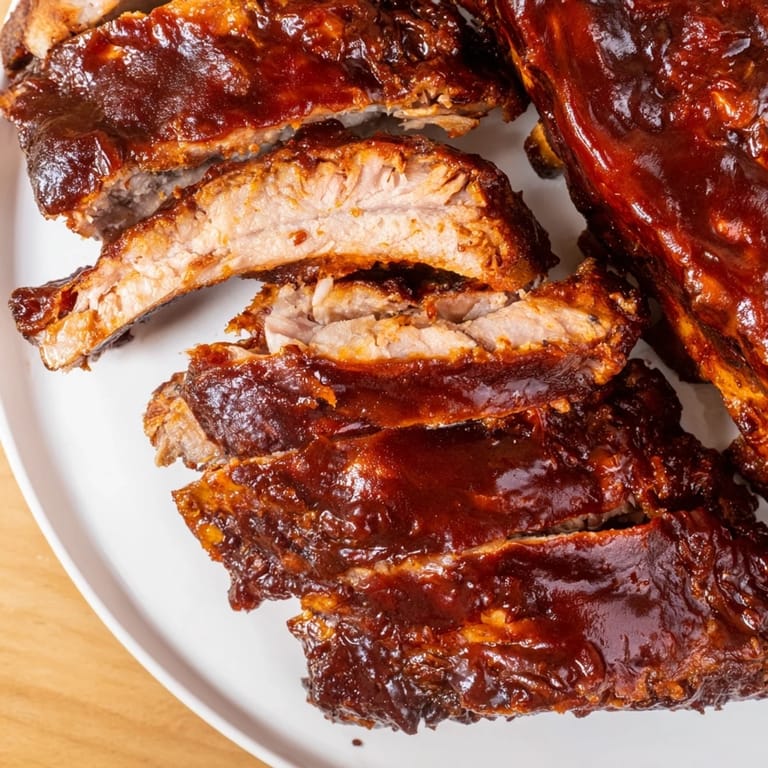
- Paint the ribs with your glaze mixture, then return them to the heat for 10–15 minutes. Baste once more halfway through so the sauce builds up into that sticky, glossy layer.
- Rest and serve:
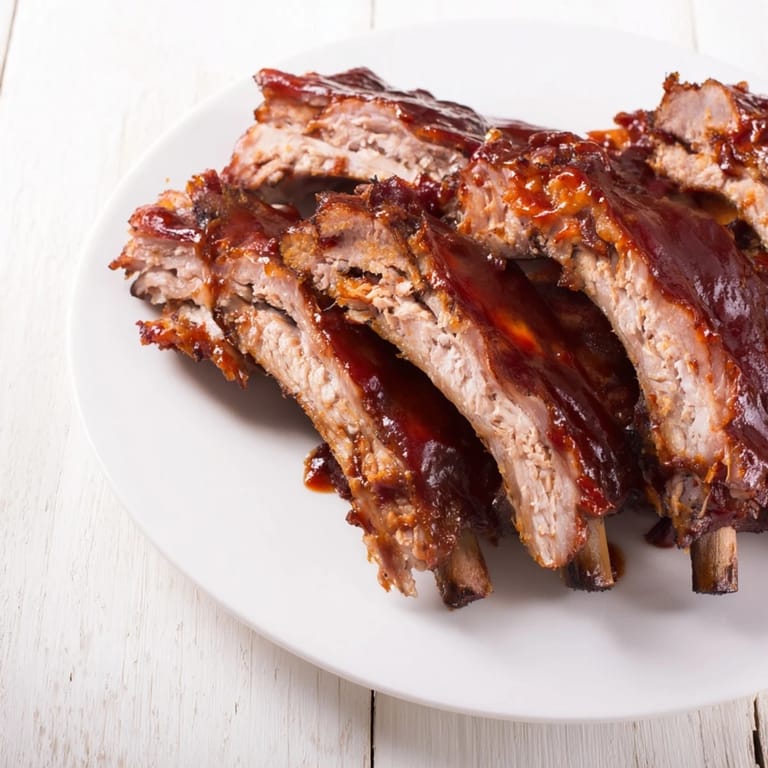
- Let the ribs rest for 5 minutes to redistribute the juices, then slice between the bones with a sharp knife. Serve with extra sauce on the side for dipping.
 Pin it
 There's a moment near the end of cooking when you crack open the foil and the aroma hits you—that mix of paprika, garlic, and caramelizing honey—and you just know you've done it right. That's the moment I stop worrying and start getting excited about who I'm about to feed.
The Art of the Dry Rub
A good dry rub is honestly the foundation of exceptional ribs, and I didn't fully appreciate this until I started experimenting with different spice combinations. The brown sugar isn't just sweetness—it caramelizes during the long cook and creates that lacquered, mahogany surface that makes people lean in for a closer look. The smoked paprika does double duty, adding both color and a deep, almost woody flavor that suggests hours of smoking even though you're using your oven. Layer in the garlic and onion powders, and you're building complexity rather than just sprinkling seasoning on meat.
Low and Slow Cooking Philosophy
The 2 to 2½ hour gentle bake at 150°C isn't just a cooking method—it's practically a meditation on patience. Most people want to rush food, crank up the heat, and get results fast, but ribs punish that approach. That low temperature allows the connective tissue in the meat to break down slowly into gelatin, which is what gives you that silky texture and incredible succulence. I've learned to use those hours for other prep work: setting the table, making sides, or just sitting on the porch knowing that dinner is essentially taking care of itself.
Building the Perfect Glaze
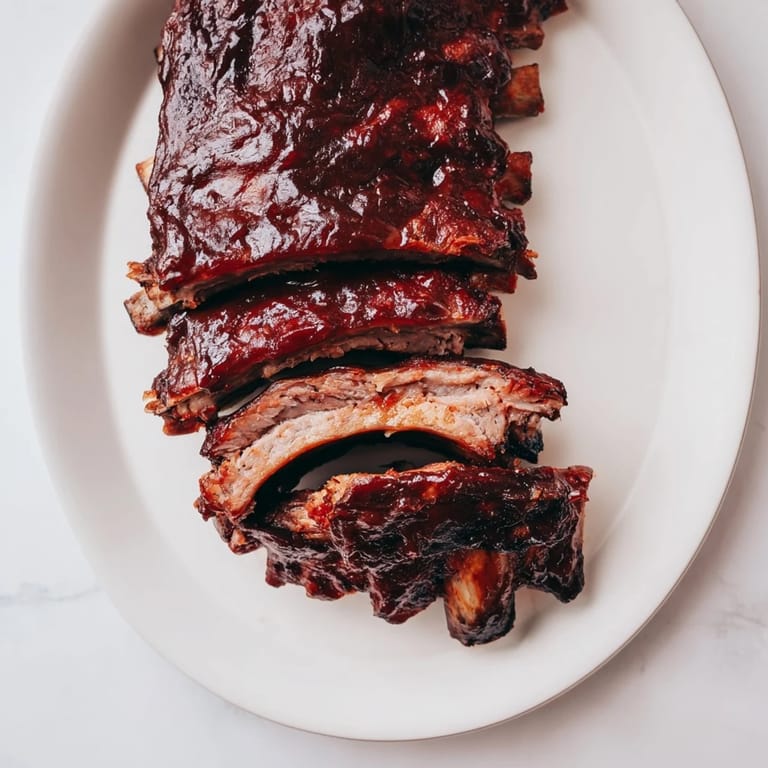
The glaze is where personality comes into play, and this recipe strikes a balance I've come to love—tangy, sweet, and just complex enough to feel intentional. Store-bought barbecue sauce provides the backbone, but the honey adds body and shine, while the apple cider vinegar brings a subtle brightness that prevents everything from tasting cloying. I've experimented with maple syrup in place of honey for autumn gatherings, and bourbon in place of vinegar for more adventurous crowds, but this base version is genuinely the crowd-pleaser.
- Always baste at least once during the final cook so the sauce builds in layers and caramelizes properly.
- If your sauce starts burning before the ribs caramelize, lower the heat slightly or cover loosely with foil.
- Make extra glaze to serve alongside—people will want to dip, and there's never enough.
 Pin it
 These ribs have become my go-to when I want to feed people something that feels effortless but tastes like I spent all day thinking about them. They're the kind of dish that brings out conversation and seconds, and that's really all any cook can hope for.