 Pin it
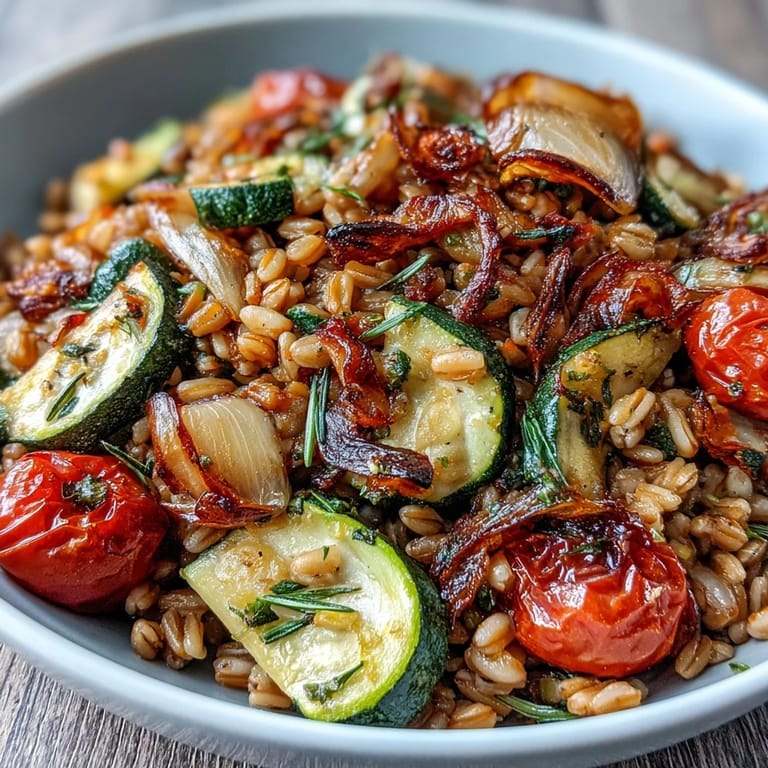
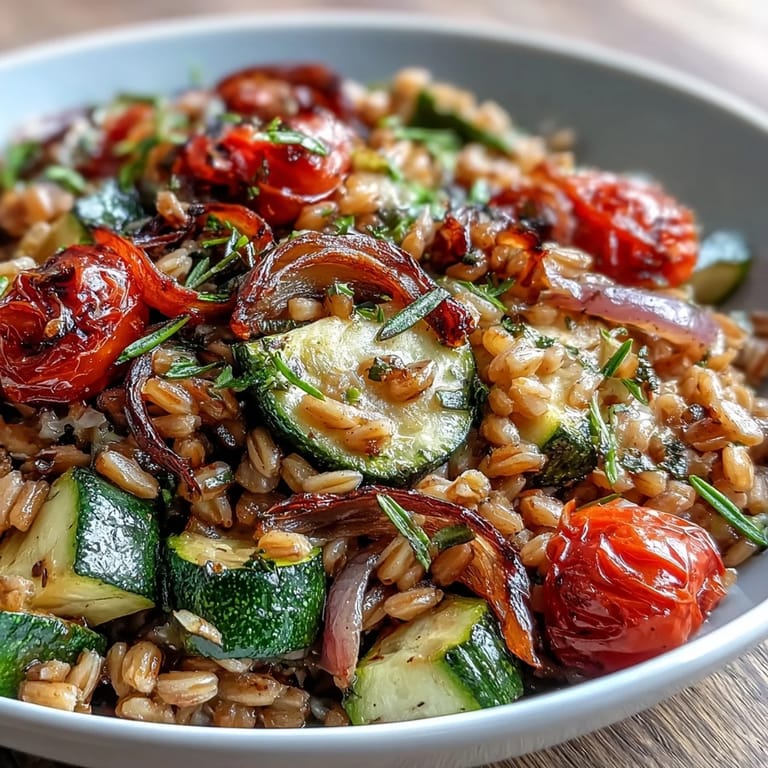
 There's something almost meditative about watching vegetables transform in a hot oven—the way a pale bell pepper deepens into burnished gold, how the zucchini edges turn crispy and sweet. I discovered this particular combination on a lazy Sunday when I had a half-empty vegetable drawer and a bag of farro that had been sitting in my pantry for months, practically calling out to be used. What started as an attempt to avoid grocery shopping became one of those dishes I now make on purpose, over and over, because it tastes like you spent hours in the kitchen when really you just roasted some vegetables and cooked a grain.
My neighbor brought over a Tupperware container of this when my daughter had just been born, and I remember being too sleep-deprived to appreciate how thoughtful it was until I actually tasted it—warm, colorful, filling enough that I didn't feel hollow, but light enough that my exhausted stomach could handle it. That bowl of farro and roasted vegetables became proof that good food doesn't need to be complicated to matter.
Ingredients
- Farro (1 cup uncooked): This ancient grain has a nutty flavor and satisfying chew that regular rice can't match; rinse it first to remove any debris.
- Vegetable broth or water (3 cups): Use broth if you want more flavor, but water works fine and lets the roasted vegetables shine.
- Red bell pepper (1, diced): The sweetness intensifies during roasting, so don't skip this even if you think you don't like peppers.
- Zucchini (1, diced): Cut into roughly the same size as your other vegetables so everything cooks evenly.
- Red onion (1, cut into wedges): The purple color stays vibrant and the flavor mellows beautifully when roasted.
- Medium carrot (1, sliced): Slice them thin enough to cook through in 30 minutes, or they'll stay too crunchy.
- Cherry tomatoes (1 cup, halved): Add these only in the last 15 minutes of roasting or they'll shrivel into nothing.
- Olive oil (2 tablespoons for roasting, plus 2 for dressing): Don't skip the extra-virgin version for the final drizzle—it really does taste different.
- Dried thyme and oregano (1 teaspoon each): These dried herbs bloom when they hit the heat, flavoring both the vegetables and the oil they cook in.
- Salt and pepper: Taste as you go; you might need more than the recipe suggests depending on your broth's saltiness.
- Balsamic vinegar (1 tablespoon): The acidity brings everything into focus and prevents the dish from tasting heavy.
- Fresh parsley (1/4 cup chopped): Stir this in right before serving so it stays bright and doesn't turn dark.
- Feta cheese (2 tablespoons crumbled, optional): Use a good quality feta if you're including it—the salty brine makes all the difference.
Tired of Takeout? 🥡
Get 10 meals you can make faster than delivery arrives. Seriously.
One email. No spam. Unsubscribe anytime.
Instructions
- Heat your oven and prep:
- Set the oven to 425°F and line a large baking sheet with parchment paper so cleanup is effortless and nothing sticks.
- Build your vegetable mixture:
- In a large bowl, toss all your cut vegetables with the 2 tablespoons of olive oil and the dried herbs, then scatter them across the baking sheet in a single layer. They should touch the hot surface, not pile on top of each other, so they caramelize instead of steam.
- Roast until golden:
- Pop them in the oven and set a timer for 15 minutes, then give everything a good stir so the edges brown evenly. Roast for another 10-15 minutes until the vegetables are tender and the edges turn deep brown.
- Cook the farro while vegetables roast:
- Rinse the farro under cold water to remove any dust, then bring it to a boil in a saucepan with your broth, reduce the heat, cover, and let it simmer for about 25-30 minutes until the grains are tender but still have a slight chew. You'll know it's done when you bite one and it doesn't taste raw but hasn't turned to mush either.
- Combine everything warm:
- Toss the hot farro with the roasted vegetables, the extra-virgin olive oil, and the balsamic vinegar while everything is still warm so the flavors meld together.
- Finish and serve:
- Stir in the fresh parsley right before serving and top with feta if you're using it—this keeps the parsley bright and the cheese from melting into oblivion.
 Pin it
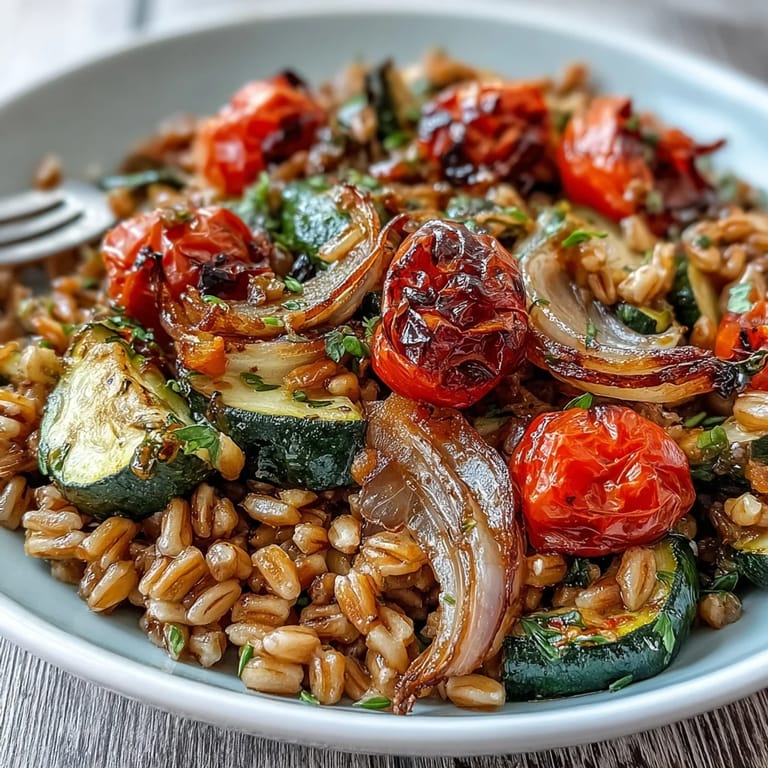
 My son once asked if this counted as a salad, and before I could answer he'd already gone back for seconds, so I decided it didn't matter what we called it. The fact that something this wholesome and vegetable-forward could feel indulgent and satisfying taught me that food doesn't need to choose between being good for you and being delicious.
Why Farro Matters
Most people think all grains taste the same, but farro has a personality—a slight nuttiness and a texture that's almost chewy, like it's resisting just a little bit even after it's cooked. Unlike rice, which can turn mushy if you blink, farro stays toothsome and substantial, which is why this dish feels like an actual meal rather than a side. The grain also absorbs the flavors around it without disappearing into the background, so every bite tastes intentional.
The Secret of Roasted Vegetables
The difference between roasted vegetables and steamed vegetables is the same as the difference between caramel and plain sugar—it's all about heat and patience and letting things get a little brown. When vegetables roast at high heat with oil and herbs, their natural sugars concentrate and their edges crisp up, which means they taste sweeter and more complex than any raw vegetable could ever be. This is why I always make extra roasted vegetables even when I'm not making this dish, because they disappear into everyone's lunches and no one questions why there's no dessert.
Making It Your Own
The beauty of this dish is that it works with whatever vegetables are in season or lurking in your crisper drawer—eggplant, mushrooms, butternut squash, broccoli, asparagus, whatever you have. The technique stays the same and the results always feel fresh and intentional rather than like you're using up scraps. The only rule I follow is trying to get a mix of colors and textures so each bite stays interesting.
- Swap bell peppers for any other roasted vegetable and the dish still works beautifully.
- Make it vegan by skipping the feta or using a cashew cream if you want something creamier.
- Serve it warm or cold depending on the weather and your mood—it's equally good either way.
 Pin it
 This is the kind of dish that sneaks into your regular rotation because it's reliable and tasty and doesn't ask much of you. Make it once and you'll understand why it keeps showing up on dinner tables, in lunch containers, and as a gift for people during their difficult weeks.
Recipe Questions & Answers
- → Is farro gluten-free?
Farro contains gluten as it's a wheat variety. Those with gluten sensitivity should substitute with quinoa, brown rice, or millet.
- → Can I make this ahead?
Absolutely. Both the cooked farro and roasted vegetables store well for 3-4 days. Combine when ready to serve, adding fresh herbs and dressing last.
- → What vegetables work best?
Root vegetables, eggplant, mushrooms, butternut squash, and Brussels sprouts all roast beautifully. Choose seasonal produce for best flavor and value.
- → Do I need to soak farro?
No soaking required. Simply rinse under cold water and simmer in broth or water for 25-30 minutes until tender but still pleasantly chewy.
- → Can I serve this cold?
Yes, this works wonderfully as a room-temperature grain salad. The flavors actually develop more depth after chilling for a few hours.
- → How can I add more protein?
Stir in chickpeas, white beans, or lentils. Top with grilled chicken, shrimp, or a fried egg. Toasted walnuts or pine nuts also add protein.